
Spicy Rapid Roast Chicken: The Ultimate Guide to Bold Flavor in Record Time


Introduction: When Dinner Needs to Be Fast and Absolutely Spectacular
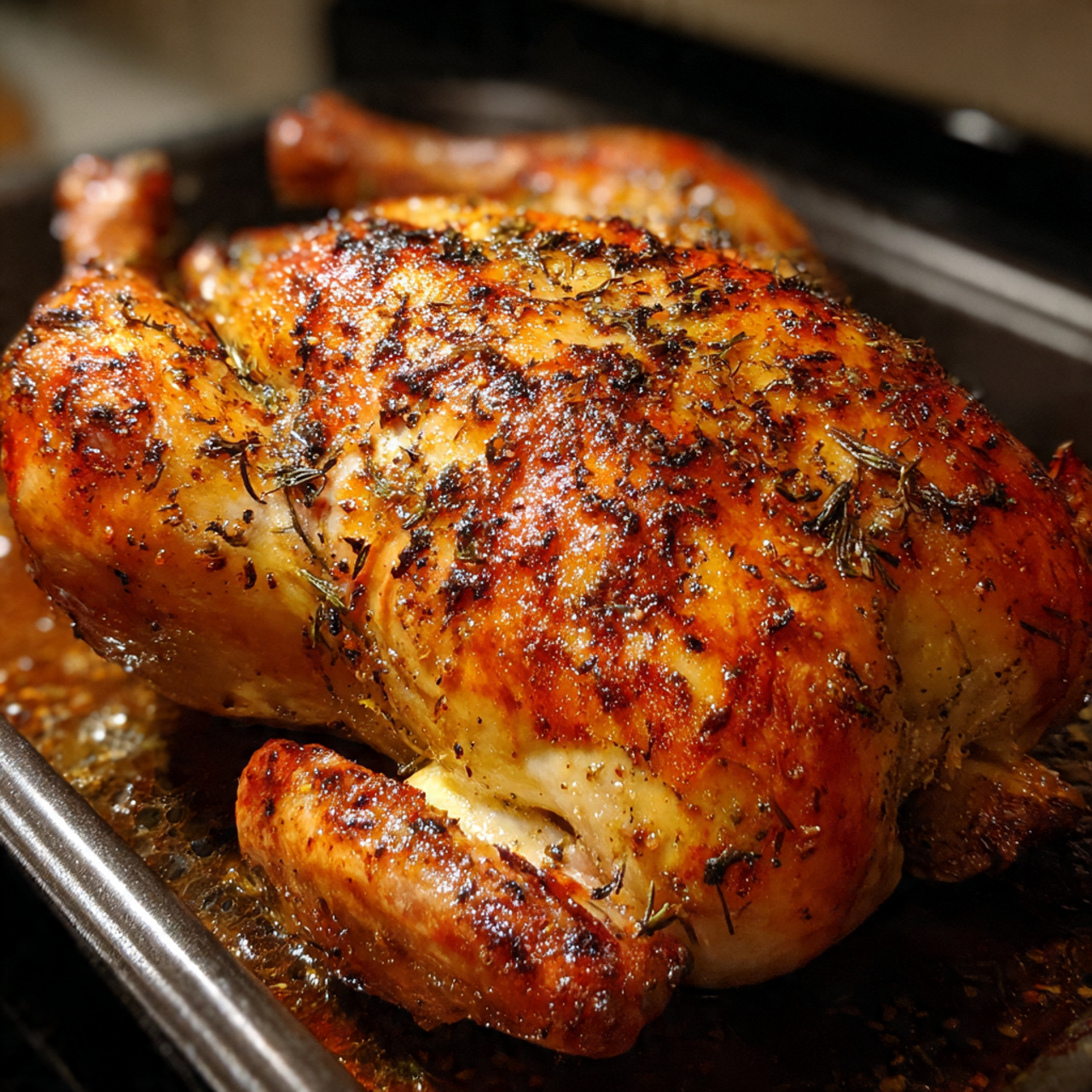
Spicy Rapid Roast Chicken is the recipe that permanently changed how I think about weeknight dinners — proving once and for all that extraordinary flavor doesn’t require extraordinary amounts of time. This isn’t the all-day roast chicken that perfumes your house from morning until evening. This is a high-heat, bold-spiced, gloriously crispy-skinned bird that goes from refrigerator to table in under an hour without sacrificing a single ounce of the depth, juiciness, and dramatic flavor that makes roast chicken one of the most beloved meals in the entire world.
The secret to making rapid roast chicken work — and work spectacularly — lies in understanding a few key principles: high oven temperature, proper spatchcocking or butterflying technique, and a spice rub that penetrates the meat quickly and crisps magnificently under intense heat. Where traditional roast chicken recipes rely on low-and-slow cooking to develop flavor gradually, this spicy rapid version achieves the same depth through bold seasoning, direct heat exposure, and strategic technique that any home cook can master.
What makes this particular recipe stand apart from every other quick roast chicken you’ve tried is the spice profile. This isn’t timid seasoning — this is a full-commitment, flavor-forward rub built on smoked paprika, cayenne, cumin, garlic, and a carefully balanced blend of warming spices that create a deeply complex crust on the outside while perfuming the meat from skin to bone. The heat level is bold but not punishing, providing genuine warmth that builds pleasantly without overwhelming the natural richness of properly roasted chicken.
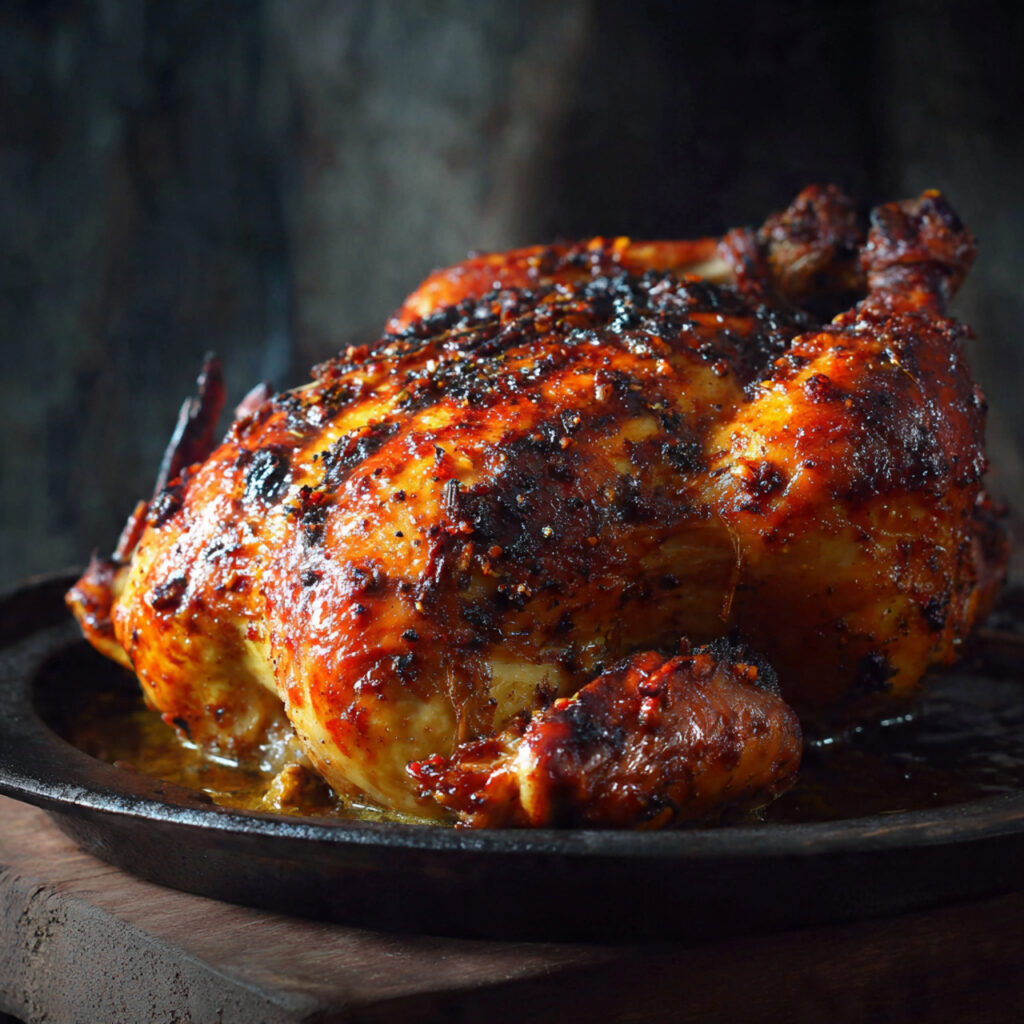
The beauty of Spicy Rapid Roast Chicken extends beyond just the speed. This recipe produces chicken that genuinely rivals anything you’d get from a dedicated rotisserie shop or upscale restaurant — crackling, deeply colored skin that shatters at the touch, meat that’s juicy and flavorful all the way through, and pan drippings so magnificent that you’ll want to pour them over everything on the plate. It’s the kind of recipe that makes people ask what restaurant you ordered from, which is perhaps the highest compliment any home cook can receive.
Whether you’re feeding a hungry family on a Tuesday evening, impressing guests with minimal preparation stress, or simply craving roast chicken but lacking the hours a traditional recipe demands, this Spicy Rapid Roast Chicken delivers everything you want and nothing you don’t. In this comprehensive guide, you’ll learn not just how to make it, but why every decision — from butterflying technique to resting time — matters and how to execute each step with confidence.
The Science Behind Rapid High-Heat Roasting
Understanding why this recipe works helps you execute it better and troubleshoot confidently if anything goes wrong.
Why High Heat Is the Key
Traditional roast chicken recipes typically call for oven temperatures between 325-375°F. Spicy Rapid Roast Chicken uses temperatures of 450-500°F — significantly hotter, and for good reason. At these temperatures, the Maillard reaction (the chemical process responsible for browning and flavor development) happens rapidly and intensely, creating that gorgeous mahogany crust within minutes rather than the hour-plus required at lower temperatures.
High heat also rapidly drives moisture toward the surface of the chicken where it evaporates quickly, leaving behind a dry, crispy skin rather than the steamed, rubbery skin that can result from lower-temperature cooking. The key is ensuring the chicken is properly positioned to allow maximum heat circulation, which is where spatchcocking becomes essential.
Why Spatchcocking Changes Everything
Spatchcocking — removing the backbone and pressing the chicken flat — is arguably the single most impactful technique change you can make to any roast chicken recipe. When a whole chicken roasts in its natural position, the thick breast meat and thinner leg meat cook at dramatically different rates. The result is often overcooked, dry breast meat by the time the legs and thighs reach safe temperature.
Flattened chicken presents an even thickness across most of the bird, allowing heat to penetrate uniformly. The increased surface area also means more skin exposure to direct heat, resulting in more crispy skin and faster overall cooking. A spatchcocked chicken that would take 75-90 minutes as a traditional roast cooks in 40-45 minutes, with superior results across the board.
Why the Spice Rub Matters More Than You Think
Beyond adding flavor, the spice rub in this Spicy Rapid Roast Chicken recipe serves several functional purposes. The salt draws moisture to the surface and then back into the meat through osmosis, seasoning the interior. The fat (olive oil) carries fat-soluble flavor compounds from the spices deep into the meat and helps the skin crisp by promoting even browning. The sugar in certain spices (paprika, in particular) caramelizes under high heat, creating color and complexity. Understanding these functions helps you appreciate why precise application of the rub — including underneath the skin — makes such a significant difference.
Ingredients: Building Your Spicy Rapid Roast Chicken
This recipe serves 4-6 people depending on appetite and accompaniments. Every ingredient contributes specific flavor and functional qualities to the final dish.
For the Chicken
- 1 whole chicken (3½ to 4½ pounds) — The size matters; larger birds take longer and may not cook through rapidly enough. Stick to this range for the timing to work perfectly.
- 3 tablespoons extra virgin olive oil — Carries fat-soluble spice flavors into the meat and promotes even browning of the skin
- 1½ teaspoons kosher salt — For seasoning throughout; kosher salt’s coarser grain distributes more evenly than table salt
- Fresh cracked black pepper — Generous application for aromatic heat
For the Spice Rub
- 2 teaspoons smoked paprika — The backbone of the rub; adds color, smokiness, and subtle sweetness
- 1½ teaspoons cayenne pepper — The primary heat source; adjust up or down based on your spice tolerance
- 1½ teaspoons garlic powder — Provides deep, savory garlic flavor that penetrates the meat
- 1 teaspoon ground cumin — Earthy, warming depth that complements the heat beautifully
- 1 teaspoon onion powder — Adds savory sweetness and rounds out the rub
- 1 teaspoon dried oregano — Herbal brightness that cuts through the richness
- ½ teaspoon ground coriander — Subtle citrusy, floral note that adds complexity
- ½ teaspoon ground turmeric — Contributes color and a mild, earthy warmth
- ¼ teaspoon ground cinnamon — Just a whisper adds unexpected depth; don’t skip it
- ¼ teaspoon chipotle powder — Smoky heat that layers beautifully with the cayenne
For the Pan
- 1 large onion, roughly sliced into rounds — Creates a roasting rack and infuses drippings with flavor
- 1 whole head of garlic, halved crosswise — Roasts alongside the chicken and creates incredible drippings
- 2-3 sprigs fresh thyme — Aromatic herb that perfumes the chicken from underneath
- 2-3 sprigs fresh rosemary — Resinous herb that stands up to high heat beautifully
- ½ cup chicken stock or water — Prevents drippings from burning and creates base for pan sauce
Optional Flavor Boosters
- Zest of 1 lemon — Add to the spice rub for brightness
- 1 tablespoon fresh lime juice — Drizzle over finished chicken for acidity
- 2 tablespoons unsalted butter — Place pats under the skin along with the spice rub for extraordinary richness
- 1 teaspoon harissa paste — Mix into the rub for North African-inspired depth
- Fresh cilantro or parsley — For garnish and fresh herb contrast
Step-by-Step Instructions: Your Path to Perfect Spicy Rapid Roast Chicken
Step 1: Bring the Chicken to Room Temperature
Remove your chicken from the refrigerator 30-45 minutes before you plan to cook it. A cold bird placed directly into a hot oven causes two problems: the outer layers overcook before heat penetrates to the center, and the rapid temperature change can cause moisture to seep out of the muscle fibers before the proteins have time to set.
Letting the chicken sit at room temperature allows for more even cooking from edge to center, which is especially critical with the high-heat rapid method. While the chicken rests, pat it completely dry with paper towels — both the exterior skin and the interior cavity. Dry skin is the foundation of crispy skin. Any surface moisture will steam rather than crisp, which is exactly what you want to avoid.
Step 2: Spatchcock the Chicken
Place the chicken breast-side down on a sturdy cutting board. Using sharp kitchen shears or poultry shears, locate the backbone running down the center of the back. Cut along one side of the backbone from the tail end to the neck opening. Then cut along the other side and remove the backbone completely. Save it in a zip-lock bag in the freezer for making stock — it’s packed with flavor.
Flip the chicken breast-side up. Press firmly down on the breastbone with the heel of your hand until you hear and feel a crack — this flattens the bird completely. The chicken should now lie flat with both halves spread out symmetrically. Some cooks also make small slits in the skin near the thighs to tuck the leg tips, creating a tidier presentation, though this is entirely optional.
If the idea of spatchcocking intimidates you, ask your butcher to do it — most are happy to help and it takes them less than a minute.
Step 3: Prepare the Spice Rub
In a small bowl, combine all the spice rub ingredients: smoked paprika, cayenne, garlic powder, cumin, onion powder, dried oregano, ground coriander, turmeric, cinnamon, and chipotle powder. Add the olive oil and salt, stirring until everything is combined into a thick, fragrant paste.
The paste consistency is important — it should be spreadable and coating rather than liquid. If it seems too thick, add a small drizzle of additional olive oil. If it’s too loose, it won’t adhere to the chicken properly.
Taste a tiny bit of the rub on your finger. Adjust salt, heat, or other spices according to your preference before applying it. It’s much easier to adjust the rub now than after it’s been applied.
Step 4: Apply the Spice Rub
Here’s where technique matters tremendously. You’ll be applying the rub in three places: under the skin, on the exterior of the skin, and inside the cavity.
Starting with the breast, gently slide your fingers between the skin and the meat, working carefully to separate the skin without tearing it. Push spice paste under the skin of both breasts and the thighs, spreading it as evenly as possible using your fingers outside the skin. This under-skin application directly seasons the meat and produces incomparably flavorful results.
Next, rub the remaining spice paste all over the exterior skin — every surface, every crevice. Don’t forget the underside of the chicken. Get into the areas between the thighs and body, around the wings, and on the back. Finally, rub a small amount inside the cavity.
The chicken should look deeply colored and uniformly coated with the rust-red spice paste. If you have time, let it sit with the rub applied for 15-30 minutes at room temperature — this brief marinating time makes a noticeable difference in flavor penetration.
Step 5: Prepare the Roasting Pan
Preheat your oven to 450°F (230°C). While it heats, prepare your roasting pan. Use a large, heavy roasting pan, cast iron skillet, or rimmed baking sheet — something that can handle extremely high heat without warping.
Scatter the sliced onion rounds across the bottom of the pan. Nestle the halved garlic head cut-side up among the onions. Lay the fresh thyme and rosemary sprigs over the onions. Pour the chicken stock into the pan.
This aromatic bed serves multiple purposes: it elevates the chicken for better air circulation and crisping, it prevents drippings from burning at high heat, and it creates the most incredible pan drippings that can be turned into a simple pan sauce or poured directly over the finished chicken.
Step 6: Roast at High Heat
Place the spatchcocked chicken breast-side up on the aromatic bed in the pan. Position it so the legs and thighs are toward the back of the oven (which tends to be slightly hotter) while the breasts face the front.
Roast at 450°F for 40-45 minutes for a 3½ to 4 pound chicken. For birds closer to 4½ pounds, allow 45-50 minutes. The chicken is done when an instant-read thermometer inserted into the thickest part of the thigh (without touching bone) reads 165°F, though many experienced cooks prefer pulling at 160°F and relying on carryover cooking to bring it to temperature.
At the 25-minute mark, rotate the pan 180 degrees for even browning. This is especially important if your oven has hot spots, which virtually every home oven does.
During the last 5-10 minutes of roasting, if you want an even more dramatically crispy skin, switch the oven to broil mode. Watch carefully during this step — with all that sugar from the spices and the high fat content, the skin can go from beautifully charred to actually burned in less than a minute under the broiler.
Step 7: Check for Doneness
Never rely on visual cues alone for determining when chicken is done — the dark spice crust makes the chicken look more cooked than it might actually be. Always use a thermometer.
Insert the probe into the thickest part of the thigh, avoiding bone contact (which gives falsely high readings). You’re looking for 165°F. Also check the thickest part of the breast. If the breast reads 165°F but the thigh is still below 160°F, tent the breast loosely with foil and return to the oven for another 5 minutes.
The juices should run completely clear (not pink) when you pierce the thigh with a knife, and the leg should wiggle freely in its socket.
Step 8: Rest Before Carving
Remove the chicken from the oven and let it rest for a minimum of 10 minutes before carving — 15 minutes is even better. Resting allows the muscle fibers to relax and reabsorb the juices that were driven to the center during cooking. A chicken carved immediately loses most of its precious juices onto the cutting board. A properly rested chicken retains them in the meat where they belong.
While the chicken rests, use this time to make a quick pan sauce if desired: pour the pan drippings into a small saucepan, skim excess fat if needed, add a splash of white wine or additional stock, and simmer for 3-4 minutes until slightly reduced. This simple sauce is liquid gold.
Step 9: Carve and Serve
Carve the rested Spicy Rapid Roast Chicken by first removing the legs and thighs (cut through the joint), then the wings, then slicing the breast meat. Because you spatchcocked the chicken, carving is actually simpler than with a traditionally roasted bird — everything is more accessible and the joints are easier to find.
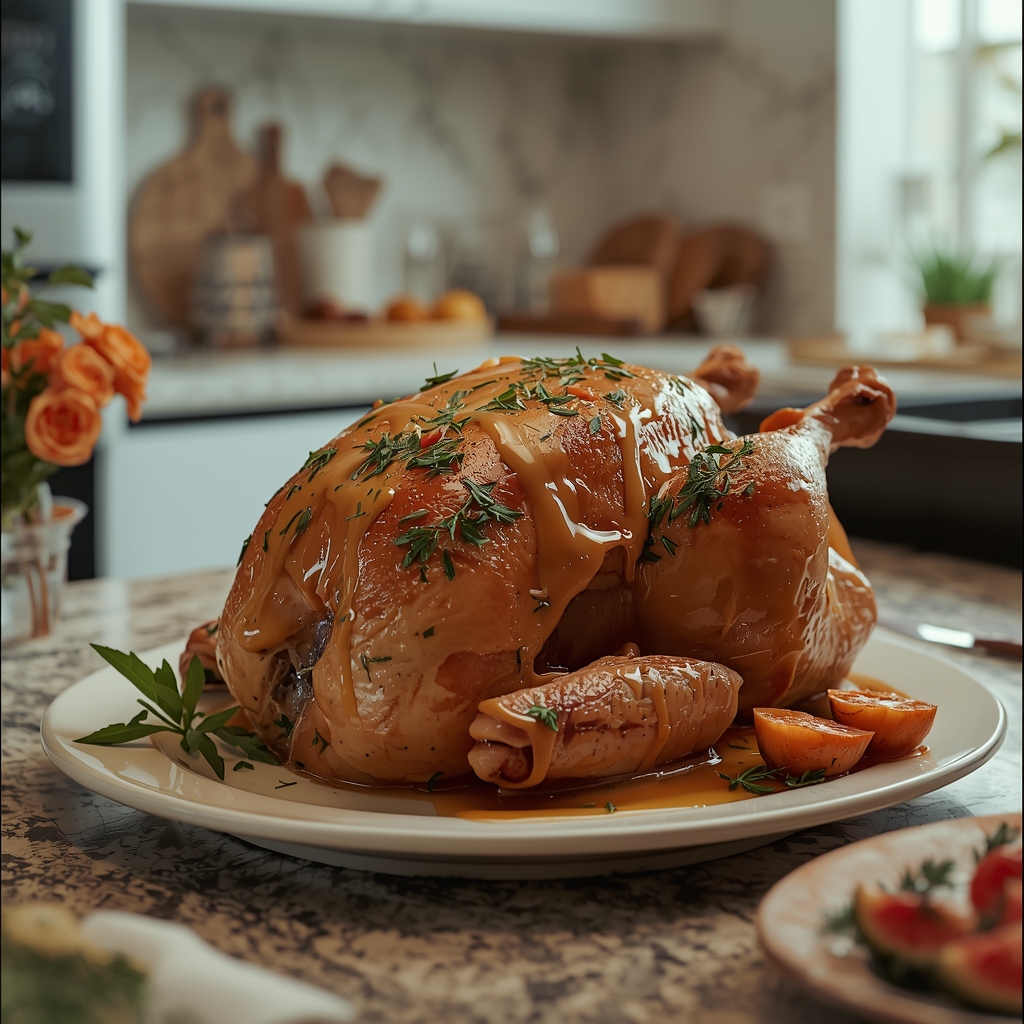
Arrange on a serving platter, drizzle with pan drippings or the quick pan sauce, and add any desired garnishes like fresh herbs, lime wedges, or thinly sliced chilis.

Pro Tips for Perfect Spicy Rapid Roast Chicken
These expert insights separate consistently excellent results from occasional ones:
Invest in an Oven Thermometer
Home ovens are notoriously inaccurate, often varying 25-50°F from the set temperature. A $10 oven thermometer reveals your oven’s true temperature and allows you to compensate accordingly. For high-heat roasting, accuracy matters significantly — 50°F too hot can mean burned skin and undercooked meat.
Dry the Skin Obsessively
Crispy skin is a direct function of how dry the skin is before roasting. Beyond patting dry with paper towels, consider placing the prepared (but unrubbed) chicken on a wire rack over a baking sheet and refrigerating it uncovered for 24-48 hours before cooking. This extended air-drying creates skin so dry it almost feels like paper — and it roasts into something extraordinary.
If you don’t have time for overnight drying, at minimum pat the chicken extremely dry and let it sit at room temperature uncovered for 30-45 minutes, turning once, to allow surface moisture to evaporate.
Season Under the Skin Generously
Skin acts as a barrier to seasoning. Any rub applied only to the exterior surface seasons the skin but barely penetrates the meat beneath. Taking the time to work spice paste under the skin directly onto the breast and thigh meat ensures every bite of the chicken — skin or not — carries full flavor.
Rest on a Wire Rack
After roasting, transfer the chicken to a wire rack rather than a cutting board or plate for resting. A flat surface traps steam under the chicken, softening the bottom skin. A wire rack allows air to circulate around the entire bird, preserving the crispiness of the underside while the chicken rests.
Make the Pan Sauce
Those dark, fragrant pan drippings left behind after roasting are concentrated flavor gold. Never discard them. Even a simple 3-minute reduction with a splash of wine or stock creates a sauce that elevates the entire meal. The roasted garlic from the pan bed can be squeezed out of its skin and whisked into the sauce for extraordinary depth.
Adjust Heat to Your Preference
The spice rub as written produces genuinely hot chicken. If you’re cooking for people with lower heat tolerance, reduce the cayenne to ½ teaspoon and omit the chipotle powder. If you want more heat, increase cayenne to 2 teaspoons and add a finely minced fresh bird’s eye chili to the rub. The recipe is designed to be adjusted without compromising the overall flavor balance.
Use a Cast Iron Pan
If you own a large cast iron skillet, use it for this recipe. Cast iron retains and distributes heat more evenly than most roasting pans, and it can go from oven to stovetop seamlessly for making the pan sauce. The seasoned surface also naturally prevents sticking and contributes subtle flavor to the drippings.
Spatchcock in Advance
You can spatchcock and rub the chicken up to 24 hours in advance. Store it uncovered on a wire rack in the refrigerator — the combined effect of the salt in the rub and the dry refrigerator air creates an almost dry-brined effect that deeply seasons the meat and dries the skin simultaneously. Chickens prepared this way produce dramatically better results than those seasoned immediately before cooking.
Common Mistakes to Avoid
Even experienced cooks can stumble with high-heat roasting. Avoid these critical errors:
Skipping the Spatchcocking
A whole, unspatchcocked chicken simply cannot cook properly using the rapid high-heat method. The thick breast meat shields the thighs and legs, creating a situation where the exterior burns before the interior reaches safe temperature. Don’t attempt to use this recipe with a whole unbutterflied chicken unless you’re willing to add significant time and accept uneven results.
Not Drying the Chicken Thoroughly
Wet skin is the enemy of crispy skin, full stop. Even a little residual moisture creates steam that prevents proper browning. Be thorough with your paper towels — blot every surface, including the cavity, until the chicken feels genuinely dry to the touch.
Overcrowding the Pan
If the chicken doesn’t fit in your pan with some space around it, steam builds up and the chicken effectively braises rather than roasts. Use the largest pan you have and don’t add too many vegetables or aromatics that crowd the cooking space.
Opening the Oven Repeatedly
Every time you open the oven door during high-heat roasting, you lose significant heat. Unlike lower-temperature cooking where the oven recovers quickly, 450°F ovens can take 5-7 minutes to return to temperature after a door opening. Resist the urge to check frequently — trust the thermometer and the timing.
Not Using a Meat Thermometer
Visual and tactile cues are unreliable with this recipe because the dark spice crust changes the appearance of the skin dramatically. A thermometer is non-negotiable. Invest in a good instant-read model and use it every time.
Carving Too Soon
Cutting into the chicken immediately after removing it from the oven releases all the precious juices. Those 10-15 minutes of resting time are when everything comes together — the juices redistribute, the proteins relax, and the meat goes from “cooked” to “perfectly juicy.” Never skip the rest.
Using Dried Herbs That Are Too Old
Old, stale dried herbs contribute almost nothing to the flavor of this rub. If your oregano, cumin, or paprika have been sitting in the cabinet for more than a year, they’ve likely lost most of their potency. Invest in fresh dried spices and store them in airtight containers away from heat and light.
Burning the Drippings
At 450°F, pan drippings can burn if the pan is dry. The chicken stock or water on the bottom of the pan is essential insurance against burning. If you notice the pan liquid evaporating during cooking, carefully add a small amount of hot water to the pan without opening the door wider than necessary.
Storage and Serving Suggestions
Storing Leftover Spicy Rapid Roast Chicken
Refrigerator Storage: Allow the chicken to cool to room temperature (within 2 hours of cooking). Remove meat from the bones and store in an airtight container in the refrigerator for up to 4 days. Store the carcass separately for making stock if desired.
Freezer Storage: Pulled or sliced chicken freezes beautifully for up to 3 months. Portion into meal-sized amounts in freezer-safe bags or containers, pressing out excess air. Thaw overnight in the refrigerator for best texture.
Reheating: The best method for reheating without destroying the crispy skin is the oven method: place chicken pieces in a single layer on a baking sheet and warm at 375°F for 10-12 minutes until heated through. Avoid microwaving skin-on pieces — the microwave creates steam that turns crispy skin rubbery.
Serving the Spicy Rapid Roast Chicken
Classic Accompaniments: The bold spice profile of this chicken pairs beautifully with cooling, creamy sides that balance the heat:
Cooling Sides:
- Cucumber raita or tzatziki — yogurt-based cooling contrast
- Creamy coleslaw — rich, cool crunch against spicy chicken
- Avocado and lime salad — creamy richness with citrus brightness
- Cooling cucumber and mint salad — refreshing contrast
Hearty Sides:
- Roasted sweet potatoes — natural sweetness complements the spice
- Garlic-butter rice — simple base that soaks up pan drippings beautifully
- Warm flatbreads or naan — perfect for wrapping chicken pieces
- Roasted vegetables — root vegetables roasted in the same pan
Grain and Legume Sides:
- Spiced chickpea salad — complements the warm spice profile
- Herbed couscous — light, fluffy base for the bold chicken
- Lentil dal — hearty, flavorful pairing for a complete meal
Creative Leftover Ideas:
- Spicy chicken tacos with lime crema and pickled onions
- Chicken salad with avocado and jalapeño
- Soup with leftover chicken and stock from the carcass
- Grain bowls with roasted vegetables and tahini dressing
- Spicy chicken pizza with caramelized onions and fresh arugula
- Quesadillas with pepper jack cheese
Making a Complete Meal
For an impressive dinner party spread, serve Spicy Rapid Roast Chicken with:
- Pan sauce made from the drippings
- One creamy side (potato gratin or mashed potatoes)
- One fresh side (simple green salad with lemon vinaigrette)
- Warm crusty bread for soaking up juices
- Lemon wedges for brightness

Frequently Asked Questions About Spicy Rapid Roast Chicken
Can I make this recipe without spatchcocking the chicken?
You can, but the results will be significantly different and the timing won’t work for a “rapid” roast. A whole unspatchcocked chicken at 450°F will likely burn on the outside before the interior reaches safe temperature. If you can’t or don’t want to spatchcock, lower the temperature to 400°F, increase the cooking time to approximately 60-75 minutes depending on chicken size, and tent with foil if the skin browns too quickly. The result will still be flavorful but won’t have the same crispy skin and even cooking that makes the spatchcocked version so exceptional.
How spicy is this chicken really?
With the recipe as written, this chicken delivers genuine, noticeable heat — probably a 7 out of 10 on a home cooking heat scale. The cayenne and chipotle combination creates warmth that builds pleasantly rather than hitting all at once. That said, heat tolerance varies enormously between individuals. For mild heat, reduce cayenne to ½ teaspoon and omit chipotle. For medium heat, use 1 teaspoon cayenne. For very hot, increase to 2 teaspoons cayenne and add fresh minced chili to the rub.
Can I use chicken pieces instead of a whole chicken?
Absolutely, and this actually makes the recipe even faster and more flexible. Use bone-in, skin-on chicken thighs, leg quarters, or split breasts. Apply the same rub and roast at 450°F — thighs and legs will take approximately 25-30 minutes, split breasts 30-35 minutes. The key is still patting dry, applying rub under the skin, and verifying temperature with a thermometer. Pieces also make serving easier for large groups.
What if my chicken skin is burning before the meat is cooked through?
This is a common challenge with high-heat roasting, especially if your oven runs hot. If you notice the skin getting too dark before the chicken is cooked through, tent the entire bird loosely with aluminum foil and reduce the oven temperature to 400°F for the remaining cooking time. The foil prevents further browning while allowing the interior to continue cooking safely. For future batches, verify your oven temperature with an oven thermometer and adjust accordingly.
Can I prepare the spice rub in advance?
Yes — the dry spice mixture (without the olive oil) can be made in large batches and stored in an airtight container at room temperature for up to 3 months. Mix all the dry spices together and store them in a labeled jar. When ready to cook, simply mix the desired amount with olive oil to create the paste. Having premixed spice blend on hand makes this recipe even faster — you can have seasoned chicken ready to roast in under 10 minutes.
Does this recipe work in an air fryer?
Yes, with modifications. A spatchcocked chicken typically won’t fit in a standard air fryer basket, but bone-in chicken pieces work beautifully. Apply the same rub to pieces and air fry at 380°F for 22-25 minutes for thighs and legs, or 20-22 minutes for bone-in breasts, flipping halfway through. The air fryer produces extraordinarily crispy skin — possibly even better than the oven version — because the circulating air is very efficient at removing surface moisture.
Can I marinate the chicken overnight in the spice rub?
Yes, and I strongly encourage it. Applying the spice rub and refrigerating the chicken uncovered overnight on a wire rack is arguably the best preparation method. The salt in the rub essentially dry-brines the chicken, deeply seasoning the meat while simultaneously drawing moisture from the skin and drying it for superior crispiness. The result after overnight preparation is dramatically more flavorful and has better skin texture than chicken roasted immediately after rubbing. This is the method I use when I have the time.
What’s the best way to use the leftover carcass?
The spice-infused carcass from Spicy Rapid Roast Chicken makes the most extraordinary stock. Place the carcass, any reserved bones, the roasted garlic and onion from the pan, and fresh aromatics in a large pot. Cover with cold water and simmer for 2-3 hours. The resulting stock is beautifully flavored with the spices and roasted vegetables. Use it as the base for spicy chicken soup, ramen, rice, or any recipe calling for chicken stock. Never waste a roast chicken carcass.
Conclusion: Your New Weeknight Obsession
Spicy Rapid Roast Chicken represents exactly what great home cooking should be — impressive results achieved through smart technique rather than excessive time. By spatchcocking for even cooking, applying a bold and carefully balanced spice rub under and over the skin, and roasting at high heat with proper pan preparation, you achieve a result that genuinely rivals anything from a professional kitchen in under an hour of total active effort.
The techniques I’ve shared here — from the science of high-heat roasting to the importance of resting on a wire rack — come from years of testing, refining, and genuinely obsessing over what makes roast chicken truly extraordinary rather than merely acceptable. By applying these principles, you’ll consistently produce chicken with crackling crispy skin, perfectly seasoned meat, and those extraordinary pan drippings that make everyone at the table lean forward in anticipation.
Remember that the best version of this recipe is the one you make your own. Adjust the heat to your preference, experiment with different spice combinations once you’re comfortable with the base recipe, try different accompaniments, and explore the remarkable versatility of leftovers. The foundation is solid, tested, and reliable — the rest is your creativity.
Whether this Spicy Rapid Roast Chicken becomes your weeknight go-to, your impressive dinner party centerpiece, or simply your answer to every “what should I make for dinner?” question, I hope it brings as much satisfaction and excitement to your table as it has to mine. Preheat that oven, sharpen those kitchen shears, and prepare to make the most spectacular fast roast chicken of your life.
Print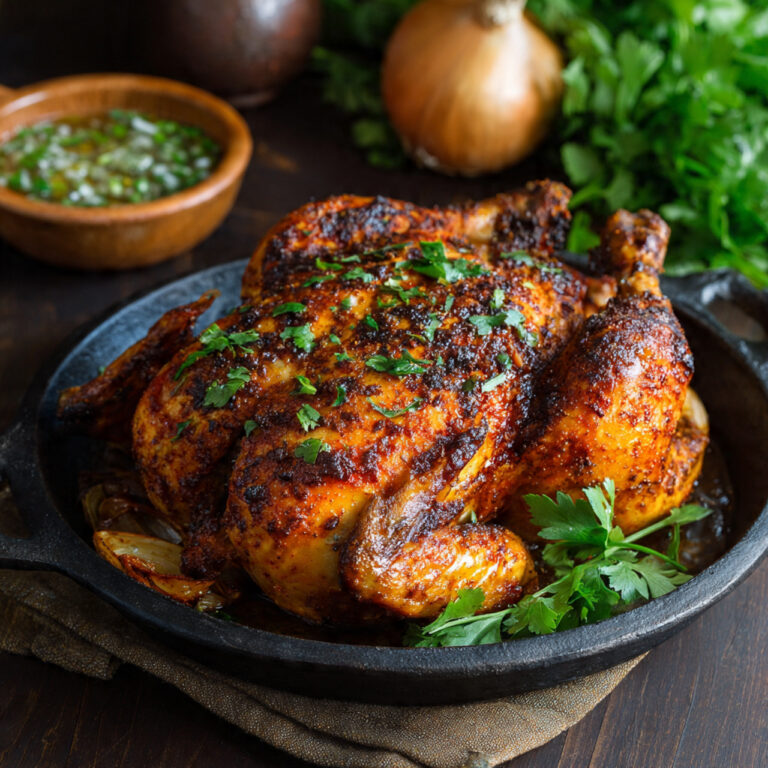
Spicy Rapid Roast Chicken: The Ultimate Guide to Bold Flavor in Record Time
This bold, flavor-packed whole chicken delivers the deep satisfaction of traditional roast chicken in a fraction of the time. Spatchcocked for even cooking and coated in a spectacular spice rub of smoked paprika, cayenne, cumin, and warming spices, this bird roasts at high heat to produce crackling-crispy skin, juicy flavorful meat, and pan drippings magnificent enough to drink. Perfect for weeknight dinners and impressive enough for company.
- Total Time: 1 hour 45 minutes (including rests)
- Yield: 4-6 servings
Ingredients
The Chicken:
- 1 whole chicken (3½ to 4½ pounds), spatchcocked
- 3 tablespoons extra virgin olive oil
- 1½ teaspoons kosher salt
- Fresh cracked black pepper to taste
Spice Rub:
- 2 teaspoons smoked paprika
- 1½ teaspoons cayenne pepper (reduce for mild heat)
- 1½ teaspoons garlic powder
- 1 teaspoon ground cumin
- 1 teaspoon onion powder
- 1 teaspoon dried oregano
- ½ teaspoon ground coriander
- ½ teaspoon ground turmeric
- ¼ teaspoon ground cinnamon
- ¼ teaspoon chipotle powder
Pan Base:
- 1 large onion, sliced into rounds
- 1 head garlic, halved crosswise
- 2-3 sprigs fresh thyme
- 2-3 sprigs fresh rosemary
- ½ cup chicken stock or water
Instructions
- Bring to room temperature: Remove chicken from refrigerator 30-45 minutes before cooking. Pat completely dry with paper towels.
- Spatchcock: Place chicken breast-side down. Cut along both sides of backbone with kitchen shears and remove it. Flip chicken and press firmly on breastbone until flat.
- Make spice rub: Combine all spice rub ingredients with olive oil and salt in a small bowl to form a thick paste.
- Apply rub: Work spice paste under skin of breasts and thighs, then rub remaining paste over all exterior surfaces and inside cavity. Let rest 15-30 minutes.
- Prepare pan: Preheat oven to 450°F. Arrange onion, garlic, and herbs in roasting pan. Add chicken stock.
- Roast: Place chicken breast-side up on aromatic bed. Roast at 450°F for 40-45 minutes, rotating pan at 25 minutes, until internal temperature at thickest thigh reads 165°F.
- Optional broil: Switch to broil for final 3-5 minutes for extra-crispy skin. Watch carefully.
- Rest: Transfer to wire rack and rest 10-15 minutes before carving.
- Make pan sauce: Simmer drippings with additional stock for 3-4 minutes. Season and serve alongside chicken.
- Carve and serve: Carve into pieces, arrange on platter, drizzle with pan sauce, and garnish with fresh herbs and lime wedges.
Notes
- Reduce cayenne to ½ teaspoon for mild version; increase to 2 teaspoons for very spicy.
- For best results, apply rub and refrigerate uncovered overnight before roasting.
- Verify doneness with thermometer — dark spice crust makes visual assessment unreliable.
- Chicken pieces (thighs, legs, breasts) can be substituted — reduce cooking time to 25-35 minutes.
- Air fryer method: 380°F for 22-25 minutes for bone-in pieces, flipping halfway.
- Save the carcass for making exceptionally flavored spiced chicken stock.
- Pan drippings are exceptional — never discard them.
- Let pan sauce reduce slightly for more concentrated flavor.
- Prep Time: 15 minutes
- Cook Time: 45 minutes
- Category: Main dishes
- Method: Baking
- Cuisine: American
- Diet: Vegan