The Authentic Aperol Spritz Recipe: Italy’s Most Iconic Cocktail in 3 Easy Steps

Introduction
The Aperol Spritz recipe is the effortlessly chic Italian cocktail that’s taken the world by storm, and once you taste one made properly, you’ll understand why. I had my first real Aperol Spritz sitting at a café in Venice’s Piazza San Marco, watching the sun paint the sky orange as the bells chimed six o’clock—aperitivo hour. The bartender barely looked as he mixed it, the ratio so ingrained in his muscle memory that he could make it blindfolded. Three parts prosecco, two parts Aperol, one splash of soda. That’s it.
What struck me most wasn’t just how delicious it was—bittersweet, bubbly, and impossibly refreshing—but how deceptively simple. This isn’t a cocktail that requires muddling, shaking, or fancy techniques. There’s no complicated ingredient list to hunt down. You literally build it right in the glass, and if you can count to three, you can make an authentic Aperol Spritz.
Born in the Veneto region of Italy in the early 1900s, the spritz has been a staple of Italian drinking culture for over a century. While various versions existed using different bitter liqueurs, Aperol launched a marketing campaign in the 1950s that cemented their bright orange aperitif as the spritz standard. Today, ordering an Aperol Spritz in Italy is as natural as ordering a cappuccino in the morning—it’s simply what you do before dinner.
The beauty of this drink lies in its balance. Aperol brings bittersweet orange and herbal notes, prosecco adds celebratory bubbles and lightness, and soda water provides refreshing effervescence without adding sweetness. The result is a low-alcohol cocktail that’s sophisticated enough for any occasion yet casual enough to enjoy on a random Tuesday afternoon. It’s the drink that makes you feel like you’re on vacation even when you’re just on your back porch.
Why This Aperol Spritz Recipe is Authentic
I’m giving you the real deal here—the recipe that’s served in bars from Milan to Rome:
- True 3-2-1 ratio: The classic proportions that Italians have perfected over decades
- Proper glassware: Served in a large wine glass, never a highball or rocks glass
- Minimal garnish: Just an orange slice, no elaborate fruit salads
- Ice matters: Plenty of large ice cubes to keep it cold without dilution
- No shaking: Built directly in the glass to preserve bubbles
- Aperitivo strength: Low alcohol content (around 11% ABV) perfect for pre-dinner sipping
Essential Ingredients
For One Classic Aperol Spritz:
- 3 ounces (90ml) prosecco – Use a dry Italian prosecco, not champagne
- 2 ounces (60ml) Aperol – The iconic orange Italian aperitif
- 1 ounce (30ml) soda water – Plain club soda or sparkling water
- Ice cubes – Large cubes work best to minimize dilution
- 1 orange slice – For garnish, preferably a half-wheel
Understanding Your Ingredients:
Prosecco Selection: This matters more than you might think. Use an Italian prosecco, preferably from the Veneto region where the drink originated. Look for “DOC” or “DOCG” on the label—these designations indicate quality and authenticity. The prosecco should be dry or extra dry (which, confusingly, is actually slightly sweeter than dry). Avoid champagne or other sparkling wines—they’re more expensive and the flavor profile isn’t quite right. Brands like La Marca, Mionetto, or Riondo are excellent and affordable choices.
Aperol Breakdown: Aperol is a proprietary Italian aperitif made from bitter and sweet oranges, rhubarb, and various herbs. It’s only 11% alcohol, much lower than its cousin Campari (which is 24% and significantly more bitter). Aperol’s bright orange color is natural, coming from the orange peel infusion. There’s really no substitute—if you use Campari, you’re making a different drink (a Campari Spritz, which is also delicious but not the same). Aperol has a unique bittersweet flavor with notes of orange zest, vanilla, and herbs that’s absolutely essential to this cocktail.
Soda Water Specifications: Use plain, unflavored soda water or club soda. Some people use Pellegrino or other fancy sparkling waters, which is fine, but make sure it’s not flavored and doesn’t have added sodium. The soda water’s job is simply to add lightness and effervescence, not flavor. In Italy, many bars use a soda gun or siphon, but canned or bottled soda water works perfectly at home.

Equipment You’ll Need:
- Large wine glass (14-16 ounces) or balloon glass
- Jigger for measuring (or use a shot glass)
- Bar spoon for gentle stirring
- Sharp knife for cutting orange
Step-by-Step Instructions
Step 1: Prepare Your Glass with Ice
Fill your large wine glass with ice cubes—and I mean really fill it. You want ice all the way to the rim. This keeps your drink properly chilled throughout the entire experience. I prefer larger ice cubes because they melt more slowly, but standard ice cubes work fine if that’s what you have. The glass should be so full of ice that when you pour in the liquids, there’s barely room for them to settle.
Step 2: Add the Prosecco
Pour 3 ounces of prosecco directly over the ice. If you don’t have a jigger, that’s about one-third of a standard 750ml bottle split between two drinks, or roughly 6 tablespoons if you want to get technical. Pour gently to preserve the bubbles—you’re not trying to make it foam up. The prosecco should settle nicely around the ice.
Step 3: Add the Aperol
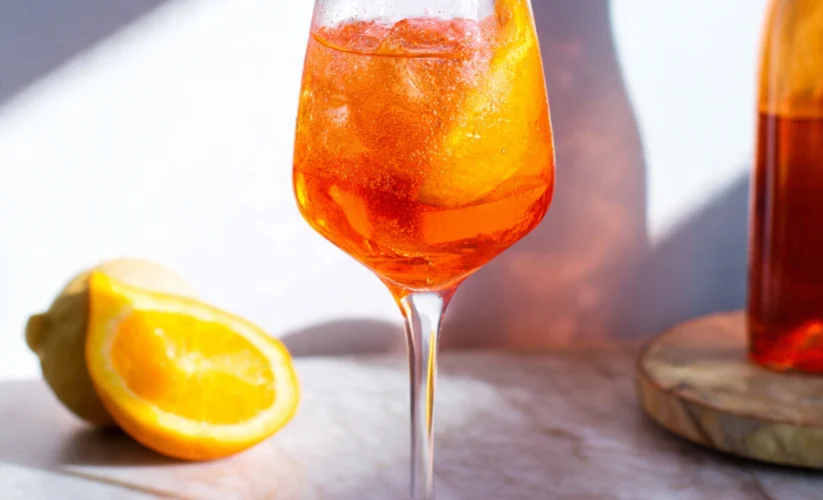
Measure and pour 2 ounces of Aperol into the glass. You’ll immediately see that gorgeous orange color start to blend with the pale prosecco, creating that signature sunset hue. The Aperol is denser than the prosecco, so it will naturally sink and swirl through the drink.
Step 4: Top with Soda Water
Add 1 ounce of soda water—just a splash, really. This might seem like a small amount compared to the other ingredients, but it’s exactly right. Too much soda water dilutes the flavor and throws off the balance. The soda adds a final layer of effervescence and lightness without watering down the drink.
Step 5: Stir Gently
Using a bar spoon, give the drink a gentle stir—two or three slow rotations. You’re not mixing a martini here; you just want to lightly combine the ingredients while preserving as many bubbles as possible. The drink should have a beautiful gradient from deeper orange at the bottom to lighter peachy-orange at the top.
Step 6: Garnish Simply
Take a fresh orange, cut a slice about half an inch thick, and then cut that slice in half to create a half-wheel. Make a small slit in the center and slide it onto the rim of the glass. That’s it. No elaborate fruit sculptures, no handfuls of berries, no herbs sticking out like a botanical garden. The Italians keep it simple and elegant.
Step 7: Serve Immediately
An Aperol Spritz waits for no one. The bubbles are at their peak right after mixing, and the drink is at its coldest. Hand it to your guest or settle in yourself, and enjoy it while it’s perfect. This is meant to be sipped slowly while chatting with friends, not gulped down.
Pro Tips for the Perfect Aperol Spritz
Having made these countless times (they’re my go-to summer cocktail), here are the secrets to spritz perfection:
Master the 3-2-1 Ratio
This classic ratio is prosecco-heavy, which is exactly what you want. Some American bars serve them too Aperol-heavy, making them too sweet and too strong. The traditional ratio is: 3 parts prosecco, 2 parts Aperol, 1 part soda. Commit it to memory.
Temperature is Everything
All your ingredients should be cold before you start. Keep your prosecco and Aperol in the refrigerator. Some people even chill their glasses in the freezer for 10 minutes before making the drink. A lukewarm Aperol Spritz is a sad thing—this drink depends on being refreshingly cold.
Ice Strategy
Use the best ice you have access to. If you’re making these for a party, consider buying a bag of large cube ice from the store. Cloudy ice from your freezer works fine, but clear ice looks more professional. Never use crushed ice—it melts too quickly and waters down the drink before you’re halfway through.
Prosecco Pouring Technique
Pour the prosecco first, not last. This helps preserve carbonation because you’re not pouring a fizzy liquid over other liquids. The gentle pour over ice is less agitating than pouring over liquid ingredients.
Don’t Overstir
Two to three gentle stirs maximum. You want to lightly combine the ingredients, not beat the bubbles into submission. The drink will continue to naturally mix as the ice melts and you sip it.
Timing Matters
Make these right before serving. Unlike some cocktails that can sit for a few minutes, an Aperol Spritz loses its magic as the bubbles dissipate. If you’re hosting, make them one at a time or have a helper assembly line.
Upgrade Your Orange Game
Use fresh, ripe oranges for garnish. A dried-out orange slice looks sad and adds nothing to the drink. If your orange isn’t juicy and bright, skip the garnish altogether—it’s better to have no garnish than a bad one.

Common Mistakes to Avoid
Mistake #1: Wrong Ratios
The most common error I see is people making these too strong by using equal parts of everything or too much Aperol. The drink should be light and sessionable—you should be able to enjoy two or three over the course of an evening without feeling drunk. Stick to the 3-2-1 ratio religiously.
Mistake #2: Using Champagne
Champagne is too expensive and too fancy for this drink. Its flavor is also more complex and delicate than prosecco, and those nuances get lost when mixed with Aperol. Save your champagne for drinking on its own and use a good, affordable prosecco for spritzes.
Mistake #3: Shaking or Blending
Never, ever shake an Aperol Spritz. This isn’t a cocktail that needs to be chilled by shaking—it’s chilled by ice. Shaking it would kill all those delightful bubbles that make the drink special. Build it right in the glass, always.
Mistake #4: Too Much Soda Water
I’ve seen bartenders basically make these into prosecco-and-Aperol-flavored soda water. The soda should be a splash, not a pour. One ounce maximum. More than that and you’re diluting the drink and throwing off the carefully balanced flavors.
Mistake #5: Wrong Glassware
Serving this in a rocks glass or highball makes it feel like a different drink. The large wine glass is traditional for good reasons—it allows the colors to show beautifully, provides room for plenty of ice, and feels elegant in your hand. Plus, the wide opening releases the aromatics perfectly.
Mistake #6: Overcomplicating the Garnish
This is not a tiki drink. You don’t need pineapple wedges, multiple citrus slices, herbs, edible flowers, or anything else excessive. One simple orange slice is all you need. The drink itself is the star.
Mistake #7: Making Them Too Far in Advance
You cannot batch these ahead of time. The prosecco goes flat, the ice melts, and the magic disappears. This is a build-to-order drink. If you’re hosting a party, you can pre-measure the Aperol into individual glasses and keep them refrigerated, then add prosecco, soda, and ice when guests arrive.
Storage and Serving Suggestions
Can You Prep Ahead?
The only thing you can really do ahead of time is cut your orange slices and keep them in the refrigerator covered with plastic wrap. Chill your prosecco and Aperol. Set up your bar area with glasses, ice bucket, and all your ingredients ready to go. That’s about it for advance prep.
Best Serving Times
The Aperol Spritz is traditionally an aperitivo drink in Italy—something you sip before dinner to stimulate the appetite. The classic time is between 5 and 8 PM. However, they’re absolutely delightful:
- At brunch with light fare
- On hot summer afternoons by the pool
- During happy hour gatherings
- At outdoor weddings and garden parties
- Whenever you need to feel like you’re in Italy
Ideal Occasions
These cocktails shine at:
- Italian dinner parties: Obviously the perfect aperitif
- Bridal and baby showers: Light enough for daytime celebrations
- Backyard barbecues: Refreshing and not too strong
- Book club meetings: Sophisticated but easy to make multiples
- Girls’ nights: Instagram-worthy and delicious
- Thanksgiving and holiday gatherings: A nice alternative to wine
Food Pairings
Aperol Spritzes pair beautifully with:
- Italian antipasti (olives, cheeses, cured meats)
- Bruschetta and crostini
- Light pasta dishes, especially seafood pasta
- Grilled vegetables
- Salty snacks like nuts, chips, or pretzels
- Fresh oysters or other shellfish
- Caprese salad
- Pizza (especially margherita or white pizza)
The bitter-orange notes of Aperol cut through rich, fatty foods while complementing lighter, fresher flavors. The low alcohol content means you can enjoy one without it overwhelming your palate before a meal.
Hosting an Aperitivo Party
If you want to throw an authentic Italian aperitivo hour:
- Set up a beautiful spread of snacks and small bites
- Make Aperol Spritzes to order as guests arrive
- Keep the atmosphere casual and conversational
- Serve between 5-7 PM
- Don’t overthink it—Italians keep aperitivo relaxed and simple
Creative Variations
Once you’ve mastered the classic, try these delicious riffs:
Aperol Spritz Royale
Use champagne instead of prosecco for a more luxurious version. The 3-2-1 ratio stays the same.
Strawberry Aperol Spritz
Muddle 2-3 fresh strawberries in the bottom of the glass before adding ice and other ingredients. Gorgeous and summery.
Grapefruit Aperol Spritz
Use grapefruit soda instead of plain soda water and garnish with grapefruit instead of orange. The pink grapefruit version is especially pretty.
Elderflower Spritz
Add a half-ounce of elderflower liqueur (like St-Germain) before adding the soda water. It adds a lovely floral sweetness.
Blood Orange Spritz
During blood orange season, use blood orange juice (½ ounce) in place of some of the soda water, and garnish with a blood orange slice.
Winter Spritz
Add a cinnamon stick and a star anise to the drink and use blood oranges. It makes the classic feel more seasonally appropriate for cooler months.

Frequently Asked Questions (FAQ)
Can I make an Aperol Spritz without prosecco?
You can, but it won’t be a traditional Aperol Spritz. Some people make them with white wine instead, which creates more of a wine spritzer with Aperol. Others use champagne or cava. The prosecco is really integral to the authentic flavor and experience—it’s specifically chosen because it’s Italian, affordable, slightly fruity, and has the right level of sweetness and bubbles. If you absolutely can’t get prosecco, a dry Spanish cava is your best substitute.
What’s the difference between Aperol and Campari?
This is a great question! Both are Italian aperitifs, but they’re quite different. Aperol is 11% alcohol and has a sweeter, lighter, more orange-forward flavor with just a gentle bitterness. Campari is 24% alcohol and is significantly more bitter with a darker red color and more complex herbal notes. A Campari Spritz (using the same ratio) is a different drink—stronger, more bitter, and more assertive. Both are delicious, but they’re not interchangeable.
Is an Aperol Spritz the same as a Venetian Spritz?
Not exactly. “Spritz” in the Veneto region refers to a whole category of drinks made with sparkling wine, a bitter liqueur, and soda water. A Venetian Spritz can be made with Aperol, Campari, Cynar, Select, or other bitter liqueurs. The Aperol Spritz is one specific type of Venetian Spritz. When you order a “spritz” in Venice without specifying, you’ll likely get Aperol these days since it’s the most popular, but traditionalists might still make it with Select or other local aperitifs.
Why is my Aperol Spritz too sweet or too bitter?
If it’s too sweet, you’re probably using too much Aperol or a prosecco that’s too sweet (try an extra dry or brut prosecco). If it’s too bitter, you might be using Campari instead of Aperol, or your ratio is off and you have too much Aperol relative to the prosecco. Make sure you’re measuring correctly—3 parts prosecco, 2 parts Aperol, 1 part soda. Also check that your prosecco is actually dry or extra dry, not sweet or demi-sec.
Can I make a large batch for a party?
Not really, unfortunately. The carbonation is essential to this drink, and it goes flat quickly when pre-mixed. What you can do is set up a DIY spritz station where guests can make their own. Provide: chilled prosecco in an ice bucket, a bottle of Aperol with a jigger next to it, a pitcher of ice water or soda water, an ice bucket with scoops, wine glasses, sliced oranges, and a small sign with the 3-2-1 ratio. People love making their own drinks, and it takes the pressure off you.
How many Aperol Spritzes can I drink?
The Aperol Spritz has an ABV of around 11-12%, similar to wine. Because they’re light and refreshing, it’s easy to drink them quickly, but pace yourself. In Italy, aperitivo culture involves sipping one or two spritzes slowly over an hour or two while snacking and socializing. These are meant for leisurely enjoyment, not rapid consumption. If you’re going to have multiple, make sure you’re eating food and drinking water too.
Do Aperol Spritzes have a lot of calories?
A standard Aperol Spritz has approximately 150-175 calories, which comes primarily from the alcohol and the small amount of sugar in both the Aperol and prosecco. It’s actually one of the lower-calorie cocktails you can order since it’s mostly sparkling wine and has no added sugar or high-calorie mixers. For comparison, a margarita can have 300-400 calories, and a piña colada can exceed 500 calories.
Can I make this drink non-alcoholic?
Yes! For a non-alcoholic version (sometimes called an “Amalfi Spritz”), use non-alcoholic prosecco or sparkling white grape juice, replace the Aperol with a non-alcoholic aperitif like Lyre’s Italian Orange or Ghia, and keep the soda water the same. The ratio stays 3-2-1. It won’t taste identical to the alcoholic version, but it captures the spirit of the drink and looks just as beautiful.
The Cultural Significance of Aperol Spritz
Understanding where this drink comes from enhances the experience of making and enjoying it. The tradition of aperitivo in Italy is sacred—it’s the daily ritual of unwinding with a drink and small bites before dinner. The word “aperitivo” comes from the Latin “aperire,” meaning “to open,” referring to opening the appetite.
The spritz itself originated when Austria controlled parts of northeastern Italy in the 1800s. Austrian soldiers found Italian wines too strong and would request a “spritz” of water to lighten them. This evolved into the spritz we know today when local bitter liqueurs were added.
Aperol specifically was created in 1919 by the Barbieri brothers in Padua. It took decades before the Aperol Spritz became the phenomenon it is today. A marketing campaign in the early 2000s, combined with the drink’s inherent Instagram appeal, catapulted it to global fame. Now you can find Aperol Spritzes from Sydney to São Paulo, though the best ones are still in the Veneto region where it all began.
Final Thoughts
The Aperol Spritz recipe is proof that the most iconic drinks don’t need to be complicated. Three ingredients, a simple ratio you can remember forever, and two minutes of your time create something that tastes like liquid sunshine and looks like a Venetian sunset.
What I love most about this cocktail is its democratic nature. It’s not precious or fussy. It doesn’t require obscure ingredients or specialized techniques. You don’t need to be a mixologist to make a perfect one. Yet it’s sophisticated enough for the fanciest occasions and beautiful enough to make any moment feel special.
Whether you’re lounging on your patio on a summer evening, hosting friends for Italian night, or simply want to feel transported to a café overlooking the Grand Canal, an Aperol Spritz delivers. It’s the taste of la dolce vita, the good life, available to anyone with access to a wine store and a willingness to embrace a little Italian joy.
So grab your prosecco, pour yourself a spritz, and raise your glass to simple pleasures done right. Cin cin!
Print
The Authentic Aperol Spritz Recipe: Italy’s Most Iconic Cocktail in 3 Easy Steps
The Aperol Spritz is Italy’s beloved aperitivo cocktail—a perfectly balanced, refreshingly bitter-sweet drink that’s become a global sensation. Made with prosecco, Aperol, and a splash of soda water, this elegant three-ingredient cocktail is ready in just two minutes and captures the essence of Italian dolce vita in a glass.
- Total Time: 2 minutes
- Yield: 1 cocktail
Ingredients
- 3 ounces (90ml) prosecco, chilled
- 2 ounces (60ml) Aperol, chilled
- 1 ounce (30ml) soda water
- Ice cubes (large cubes preferred)
- 1 orange slice (half-wheel) for garnish
Instructions
- Fill a large wine glass to the top with ice cubes.
- Pour 3 ounces of chilled prosecco over the ice.
- Add 2 ounces of Aperol to the glass.
- Top with 1 ounce of soda water.
- Stir gently 2-3 times with a bar spoon to lightly combine.
- Garnish with an orange half-wheel on the rim.
- Serve immediately while bubbles are at their peak.
Notes
- Remember the 3-2-1 ratio: 3 parts prosecco, 2 parts Aperol, 1 part soda
- Use Italian prosecco (DOC or DOCG), not champagne or other sparkling wines
- All ingredients should be well-chilled before mixing
- Do not shake or over-stir—preserve those bubbles!
- Make each drink fresh to order; cannot be batched in advance
- Use large ice cubes to minimize dilution
- The traditional serving glass is a large wine glass or balloon glass
- Prep Time: 2 minutes
- Cook Time: 0 minutes
- Category: Drinks
- Method: Build in glass
- Cuisine: Italian
- Diet: Low Salt