
Baked Mostaccioli: The Ultimate Comfort Food Recipe Everyone Will Love


Introduction: The Magic of Baked Mostaccioli
Baked mostaccioli is the kind of dish that brings families together around the dinner table, fills your kitchen with mouthwatering aromas, and creates memories that last a lifetime. This classic Italian-American comfort food combines tender tube-shaped pasta with a hearty meat sauce, layers of melted cheese, and just the right amount of herbs to create something truly special.
Growing up in my Italian-American household, baked mostaccioli was the star of every major gathering. My grandmother would start preparing it early in the morning, letting the sauce simmer for hours while we kids played in the yard, drawn back inside repeatedly by the irresistible smell. When she finally pulled that bubbling, golden-brown casserole from the oven, with cheese stretching between every portion, we knew we were in for something magical.
What makes baked mostaccioli particularly wonderful is its versatility and crowd-pleasing nature. It’s substantial enough to satisfy the heartiest appetites, yet elegant enough to serve at dinner parties. It feeds a crowd without breaking the bank, reheats beautifully for leftovers, and can be assembled ahead of time for stress-free entertaining. Whether you’re cooking for a weeknight family dinner, a potluck gathering, or a holiday celebration, this dish never disappoints.
The beauty of this recipe lies in its simplicity. You don’t need fancy techniques or hard-to-find ingredients. Just good pasta, flavorful sauce, quality cheese, and a bit of time in the oven. The result is layers of tender pasta coated in rich sauce, bound together with melted cheese that gets gloriously golden and bubbly on top.
In this comprehensive guide, I’ll walk you through everything you need to know to create the perfect baked mostaccioli. We’ll cover ingredient selection, preparation techniques, timing, and all the little tricks I’ve learned over decades of making this beloved dish. By the end, you’ll have all the knowledge you need to make this recipe your own family tradition.
Understanding Mostaccioli Pasta
Before we dive into the recipe, let’s talk about the star ingredient. Mostaccioli are smooth, tube-shaped pasta similar to penne but without the ridges. The name comes from the Italian word “mostacciolo,” meaning little mustache, which refers to the diagonal cut on each end.
If you can’t find mostaccioli at your grocery store, penne rigate makes an excellent substitute. The ridges actually help sauce cling better, so don’t worry about using it. Ziti is another suitable alternative, though the tubes are slightly larger. What matters most is using a sturdy tube pasta that can hold up to baking without becoming mushy.
Essential Ingredients for Perfect Baked Mostaccioli
For the Pasta Base
Mostaccioli Pasta (1 pound): Choose a good quality brand made from durum wheat semolina. The pasta should be cooked al dente since it will continue cooking in the oven.
Salt (for pasta water): Generously salt your pasta water—it should taste like the sea. This is your only opportunity to season the pasta itself.
For the Meat Sauce
Ground Beef (1 pound): I prefer 85/15 ground beef for the best balance of flavor and fat content. Too lean and your sauce will be dry; too fatty and it becomes greasy.
Italian Sausage (½ pound): Sweet or mild Italian sausage adds incredible depth of flavor. Remove the casings before cooking.
Yellow Onion (1 large, diced): Provides sweetness and foundation for the sauce.
Garlic (4 cloves, minced): Fresh garlic is essential—don’t substitute with powder here.
Crushed Tomatoes (28-ounce can): San Marzano tomatoes are ideal for their sweet, low-acid flavor, but any quality crushed tomatoes work.
Tomato Sauce (15-ounce can): This adds body and smoothness to the sauce.
Tomato Paste (2 tablespoons): Concentrates the tomato flavor and adds richness.
Beef Broth (½ cup): Adds savory depth that water simply can’t provide.
Red Wine (¼ cup, optional): Adds complexity and richness. Use something you’d drink.
Seasonings and Herbs
Dried Oregano (2 teaspoons): A classic Italian herb that’s essential for authentic flavor.
Dried Basil (2 teaspoons): Provides that distinctive Italian sweetness.
Red Pepper Flakes (½ teaspoon): Adds a subtle warmth without making it spicy.
Sugar (1 teaspoon): Balances the acidity of the tomatoes.
Salt and Black Pepper (to taste): For seasoning throughout.
Fresh Basil (¼ cup, chopped): Added at the end for brightness.
For the Cheese Layers
Ricotta Cheese (15 ounces): Use whole milk ricotta for the best texture and flavor.
Egg (1 large): Binds the ricotta mixture and prevents it from becoming watery.
Mozzarella Cheese (3 cups, shredded): Use low-moisture mozzarella for better melting. Shred from a block rather than buying pre-shredded.
Parmesan Cheese (1 cup, grated): Freshly grated Parmigiano-Reggiano adds nutty, salty complexity.
Fresh Parsley (2 tablespoons, chopped): Mixed into the ricotta for color and freshness.

Step-by-Step Instructions for Perfect Baked Mostaccioli
Step 1: Prepare Your Sauce
Start by making the meat sauce, as it needs time to develop flavor. Heat a large skillet or Dutch oven over medium-high heat. Add the ground beef and Italian sausage, breaking it up with a wooden spoon as it cooks. Cook until browned and no pink remains, about 8-10 minutes.
If there’s excessive fat in the pan (more than 2 tablespoons), drain some off, but leave a little for flavor. Add the diced onion to the meat and cook until softened and translucent, about 5 minutes. The onions will pick up all those delicious browned bits from the bottom of the pan.
Add the minced garlic and cook for just 30 seconds until fragrant. Garlic burns easily, so don’t walk away during this step.
Stir in the tomato paste and cook for 1-2 minutes, stirring constantly. This caramelizes the paste and removes any raw taste. If using wine, add it now and let it simmer for 2 minutes to cook off the alcohol.
Add the crushed tomatoes, tomato sauce, beef broth, oregano, basil, red pepper flakes, sugar, salt, and black pepper. Stir everything together, then bring to a gentle simmer. Reduce heat to low and let the sauce simmer uncovered for at least 30 minutes, stirring occasionally. The longer it simmers (up to 2 hours), the better the flavors develop.
Step 2: Cook the Pasta
While your sauce simmers, bring a large pot of water to a rolling boil. Add a generous amount of salt—about 2 tablespoons for a large pot. The water should taste pleasantly salty.
Add the mostaccioli and cook according to package directions, but reduce the time by 2 minutes. You want the pasta very al dente, almost slightly undercooked, because it will continue cooking in the oven. Overcooked pasta at this stage will turn mushy after baking.
When the pasta is done, drain it in a colander but don’t rinse it. The starchy coating helps the sauce adhere. Return the pasta to the pot.
Step 3: Prepare the Cheese Mixture
In a medium bowl, combine the ricotta cheese, egg, half of the Parmesan cheese (½ cup), chopped parsley, and a pinch of salt and pepper. Mix until smooth and well combined. The egg is crucial here—it helps the ricotta set during baking instead of turning watery.
Taste and adjust seasoning if needed. The mixture should be creamy and well-seasoned.
Step 4: Assemble the Dish
Preheat your oven to 375°F (190°C). Spray a 9×13-inch baking dish with cooking spray or brush with olive oil.
Pour about one-third of the meat sauce into the bottom of the prepared baking dish, spreading it evenly. This prevents the pasta from sticking and ensures every bite has sauce.
Add half of the cooked mostaccioli over the sauce, spreading it in an even layer. Dollop half of the ricotta mixture over the pasta, then use a spoon to spread it as evenly as possible. It doesn’t need to be perfect—rustic is fine.
Sprinkle with one-third of the mozzarella cheese (about 1 cup) and a bit of Parmesan.
Repeat the layers: remaining pasta, remaining ricotta mixture, another third of the mozzarella, and more Parmesan. Top with the remaining meat sauce, spreading it to cover completely.
Reserve the final third of mozzarella and remaining Parmesan for the top layer.
Step 5: Bake to Perfection
Cover the baking dish tightly with aluminum foil. Make sure the foil doesn’t touch the cheese—tent it slightly or spray the underside with cooking spray to prevent sticking.
Bake covered for 30 minutes. This allows everything to heat through and meld together without over-browning the top.
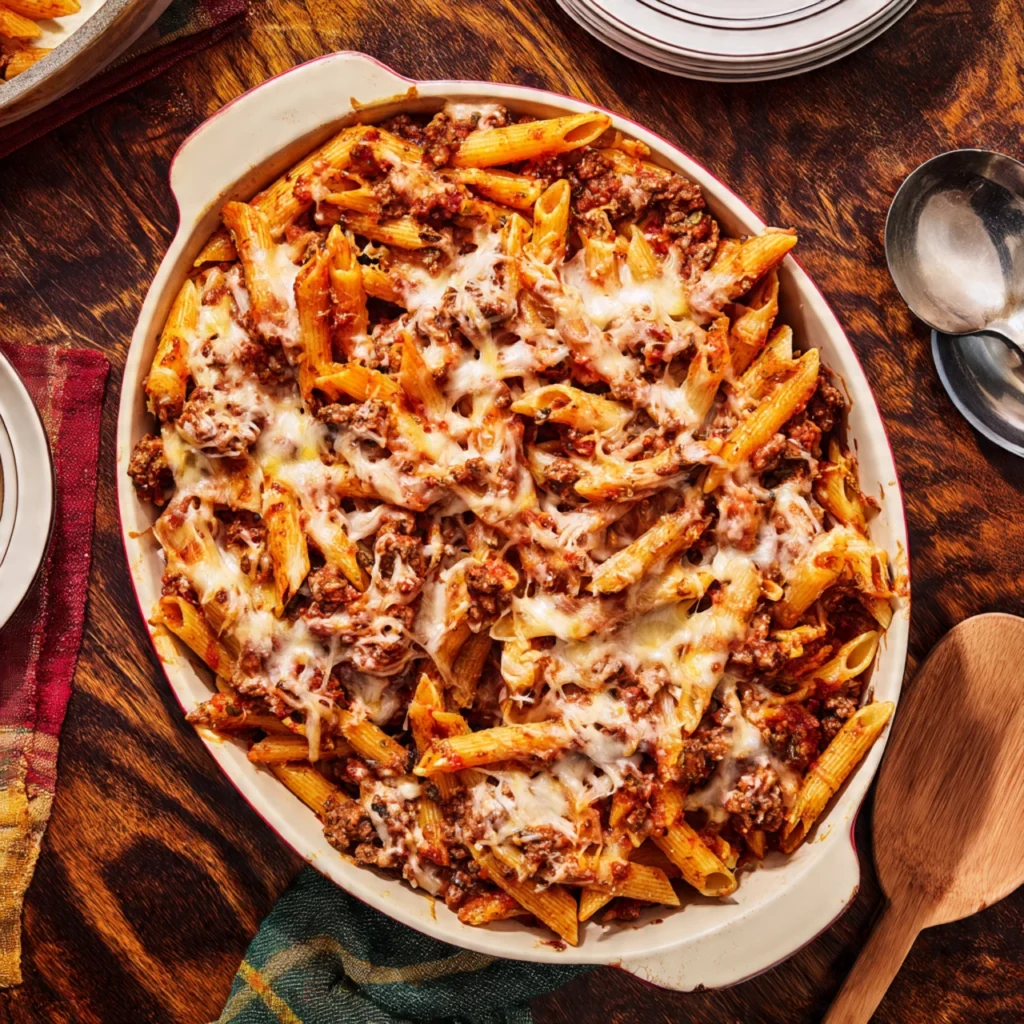
Remove the foil and sprinkle the remaining mozzarella and Parmesan over the top. Return to the oven uncovered and bake for an additional 15-20 minutes, until the cheese is melted, bubbly, and starting to turn golden brown in spots.
For an extra golden top, you can run it under the broiler for 1-2 minutes at the end, but watch carefully to prevent burning.
Step 6: Rest and Serve
This is crucial: let the baked mostaccioli rest for at least 10-15 minutes before cutting and serving. This resting time allows the layers to set up, making it much easier to serve neat portions. If you cut into it immediately, everything will be runny and soupy.
Garnish with fresh basil and extra Parmesan if desired. Serve with garlic bread and a simple green salad for a complete meal.
Pro Tips for Perfect Baked Mostaccioli
Don’t Skimp on Sauce Simmering Time
The difference between a good sauce and a great sauce is simmering time. If you can let your sauce simmer for an hour or even two, the flavors deepen and concentrate beautifully. The acidity mellows, the meat becomes more tender, and everything melds together perfectly.
Use Quality Cheese
This isn’t the place to cut corners. Pre-shredded cheese contains anti-caking agents that prevent smooth melting. Buy blocks of mozzarella and Parmesan and shred them yourself. The texture difference is remarkable.
Layer Strategically
Always start with sauce on the bottom to prevent sticking. Make sure your layers are relatively even for consistent texture throughout. Don’t worry about perfection—home cooking should look homemade.
Season as You Go
Taste and season at each step: the meat as it cooks, the sauce before simmering, the ricotta mixture, and the final sauce. Building flavor in layers creates depth that seasoning at the end can’t achieve.
Make It Ahead
Baked mostaccioli is actually better when assembled ahead. You can prepare it completely, cover tightly, and refrigerate for up to 24 hours before baking. Add 10-15 minutes to the covered baking time if starting from cold.
Freeze for Later
This dish freezes exceptionally well. Assemble completely but don’t bake. Wrap tightly in plastic wrap, then foil, and freeze for up to 3 months. Thaw overnight in the refrigerator before baking as directed, adding extra time as needed.
Add Vegetables for Balance
While traditional baked mostaccioli is just pasta, sauce, and cheese, you can absolutely add vegetables. Sautéed mushrooms, spinach, or bell peppers work beautifully mixed into the sauce. This adds nutrition and color without compromising the classic flavor.
Control the Moisture
If your sauce seems too thin, let it simmer longer uncovered to reduce. Too thick? Add a bit more broth. The sauce should coat a spoon but still be pourable. Remember, the pasta will absorb some liquid during baking.
Common Mistakes to Avoid When Making Baked Mostaccioli
Mistake 1: Overcooking the Pasta Initially
This is the most common error. Pasta that’s fully cooked before baking will turn mushy and unpleasant after 45 minutes in the oven. Always undercook by at least 2 minutes. It should still have a firm bite when you drain it.
Mistake 2: Using a Watery Sauce
Thin, watery sauce makes for a soupy casserole. Your sauce should be thick enough to coat the back of a spoon. If it’s too thin, simmer it longer uncovered to reduce the liquid. The pasta will release starch during baking, which can thin things out further.
Mistake 3: Skipping the Egg in the Ricotta
The egg isn’t optional—it’s the binder that keeps your ricotta creamy instead of watery and separated after baking. Without it, you’ll have puddles of liquid ricotta throughout your dish.
Mistake 4: Cutting Into It Too Soon
I know it’s tempting, especially when everyone’s hungry, but cutting into baked mostaccioli immediately after removing from the oven results in a sloppy mess. The 10-15 minute rest allows the cheese to set and the layers to stabilize. Use this time to make salad or set the table.
Mistake 5: Using Pre-Shredded Cheese
Pre-shredded cheese contains cellulose (wood pulp) to prevent clumping. This coating prevents smooth melting and creates a grainy texture. Take the extra minute to shred your own cheese from blocks.
Mistake 6: Not Seasoning Adequately
Pasta, ricotta, and mozzarella are all relatively bland on their own. Every component needs seasoning. Unsalted pasta water, under-seasoned sauce, and bland ricotta will result in a disappointing dish no matter how much cheese you use.
Mistake 7: Overfilling the Baking Dish
Leave some headroom in your baking dish. The casserole will bubble up during baking, and you don’t want sauce overflowing onto your oven floor. A 9×13-inch dish should only be filled about three-quarters full.
Mistake 8: Baking at the Wrong Temperature
Too hot and the top burns before the center heats through. Too low and nothing browns. 375°F is the sweet spot for even cooking and a beautifully browned top.
Storage and Serving Suggestions
Serving Your Baked Mostaccioli
Baked mostaccioli is a complete meal on its own, but these accompaniments make it even better:
Classic Garlic Bread: Crispy, buttery garlic bread is perfect for soaking up extra sauce.
Simple Green Salad: A crisp salad with Italian vinaigrette provides freshness and balances the richness.
Roasted Vegetables: Roasted broccoli, zucchini, or Brussels sprouts add color and nutrition to the plate.
Antipasto Platter: For company, start with an antipasto platter of olives, cured meats, cheeses, and marinated vegetables.
Caesar Salad: The creamy, garlicky dressing complements the Italian flavors beautifully.
Red Wine: A medium-bodied red like Chianti or Montepulciano pairs wonderfully.
Storing Leftovers
Leftover baked mostaccioli is arguably even better the next day after the flavors have melded. Let it cool completely, then cover tightly with plastic wrap or transfer to an airtight container. It will keep in the refrigerator for 3-4 days.
To reheat, you have several options. For best results, place a portion in a microwave-safe dish, cover with a damp paper towel, and microwave in 1-minute intervals until heated through. The damp paper towel prevents the pasta from drying out.
For oven reheating, place portions in an oven-safe dish, cover with foil, and heat at 350°F for 20-25 minutes until warmed through. You can add a splash of water or extra sauce if it seems dry.
Freezing Instructions
Baked mostaccioli freezes beautifully, making it perfect for meal prep. You can freeze it before or after baking.
To freeze unbaked: Assemble completely in a disposable aluminum pan, cover tightly with plastic wrap, then foil. Label with the date and baking instructions. Freeze for up to 3 months. Thaw overnight in the refrigerator before baking as directed, adding 10-15 extra minutes to account for the cold start.
To freeze after baking: Let the casserole cool completely, then cut into portions. Wrap individual portions in plastic wrap, then place in freezer bags. This allows you to reheat only what you need. Frozen portions will keep for 2-3 months.
To reheat from frozen, thaw overnight in the refrigerator, then reheat in the microwave or oven as described above.

Frequently Asked Questions About Baked Mostaccioli
What’s the difference between baked mostaccioli and baked ziti?
They’re essentially the same dish with different pasta shapes. Mostaccioli are smooth tubes cut on a diagonal, while ziti are larger, straight-cut tubes. Baked ziti sometimes includes cottage cheese instead of ricotta, but the cooking method and overall concept are identical. Use whichever pasta you prefer or can find.
Can I make baked mostaccioli vegetarian?
Absolutely. Omit the meat and create a robust vegetable sauce instead. Sauté mushrooms, bell peppers, zucchini, and spinach with garlic and onions, then add to your tomato sauce. You can also use plant-based ground meat substitutes. Add extra herbs and a splash of soy sauce for umami depth that replaces the meat flavor.
Why is my baked mostaccioli dry?
Dry baked mostaccioli usually results from too little sauce, overcooking, or using pasta that was already fully cooked before baking. Make sure your sauce is generous—you need more than you think because the pasta absorbs liquid. Don’t overbake, and always undercook your pasta initially. If you’re reheating leftovers, add a splash of water or extra sauce before heating.
Can I use no-boil noodles for baked mostaccioli?
No-boil noodles are designed for lasagna and won’t work well here. Mostaccioli are tubular pasta that need to be boiled to achieve the right texture. There’s no shortcut for this step, but the good news is that boiling pasta only takes 10 minutes and doesn’t require constant attention.
How do I prevent the cheese from burning on top?
Cover the dish with foil for the first 30 minutes of baking. This allows everything to heat through without over-browning. Remove the foil for the final 15-20 minutes to brown the cheese. If the top is browning too quickly, tent loosely with foil. Position your oven rack in the center, not too close to the top heating element.
Can I add different types of cheese?
Definitely. While the classic combination is ricotta, mozzarella, and Parmesan, you can experiment. Provolone adds sharpness, fontina brings creaminess, and Romano provides extra punch. Just maintain similar proportions—mild melting cheese (mozzarella) plus sharper aged cheese (Parmesan) plus creamy cheese (ricotta).
How many people does baked mostaccioli feed?
A 9×13-inch pan typically serves 8-10 people as a main course, or 12-15 as part of a buffet with other dishes. Portion sizes vary based on appetite and what else you’re serving. For very hungry eaters or if it’s the only main dish, plan on 6-8 servings.
Can I use ground turkey or chicken instead of beef?
Yes, but be aware that leaner meats create a less rich sauce. If using ground turkey or chicken, add an extra tablespoon of olive oil when browning to compensate for the lack of fat. You might also want to increase the Italian sausage proportion for more flavor, or use Italian-seasoned ground turkey.
Approximate Nutrition Information
Per serving (based on 10 servings):
- Calories: 485
- Total Fat: 22g
- Saturated Fat: 11g
- Trans Fat: 0.5g
- Cholesterol: 95mg
- Sodium: 780mg
- Total Carbohydrates: 42g
- Dietary Fiber: 3g
- Sugars: 7g
- Protein: 30g
- Vitamin A: 15% DV
- Vitamin C: 12% DV
- Calcium: 35% DV
- Iron: 18% DV
Note: Nutrition information is approximate and calculated based on standard ingredient measurements. Actual values will vary depending on specific brands used, portion sizes, and any modifications to the recipe. Values do not include optional garnishes or side dishes.
Final Thoughts on Baked Mostaccioli
Baked mostaccioli represents everything wonderful about Italian-American comfort food. It’s generous, warming, and brings people together. The combination of pasta, sauce, and cheese is timeless because it simply works—each component supports the others, creating something greater than the sum of its parts.
What I love most about this dish is its forgiving nature. Unlike delicate soufflés or temperamental sauces, baked mostaccioli accommodates variations and still delivers delicious results. Forgot to buy Italian sausage? Use all beef. Only have penne in the pantry? Perfect. Want to add vegetables? Go for it. The fundamental technique remains the same, and the outcome is always satisfying.
This is food that feeds both body and soul. It’s the kind of dish you make when you want to show love through cooking, when you need to feed a crowd on a budget, or when you simply crave something warm and comforting after a long day.
I encourage you to make this recipe your own. Start with this version to learn the technique, then adjust to your family’s preferences. Add more cheese if you love it extra gooey, increase the herbs if you prefer bold flavors, or throw in vegetables for added nutrition. Write notes in the margins, mark your favorite adjustments, and pass the recipe down.
The best family recipes aren’t museum pieces—they’re living documents that evolve while maintaining their essential character. Make this baked mostaccioli once, and I guarantee it’ll become part of your regular rotation. Make it a dozen times, and it’ll become part of your family’s story. Happy cooking!
Print
Baked Mostaccioli: The Ultimate Comfort Food Recipe Everyone Will Love
This hearty baked mostaccioli features layers of tender pasta tubes, rich meat sauce, creamy ricotta, and melted mozzarella cheese. It’s the ultimate Italian-American comfort food that feeds a crowd and tastes even better the next day.
- Total Time: 1 hour 35 minutes
- Yield: 8-10 servings
Ingredients
- 1 pound mostaccioli pasta
- 1 pound ground beef (85/15)
- ½ pound Italian sausage, casings removed
- 1 large yellow onion, diced
- 4 cloves garlic, minced
- 1 (28-ounce) can crushed tomatoes
- 1 (15-ounce) can tomato sauce
- 2 tablespoons tomato paste
- ½ cup beef broth
- ¼ cup red wine (optional)
- 2 teaspoons dried oregano
- 2 teaspoons dried basil
- ½ teaspoon red pepper flakes
- 1 teaspoon sugar
- Salt and black pepper to taste
- ¼ cup fresh basil, chopped
For the Cheese Layers:
- 15 ounces ricotta cheese (whole milk)
- 1 large egg
- 1 cup grated Parmesan cheese, divided
- 2 tablespoons fresh parsley, chopped
- 3 cups shredded mozzarella cheese
- Salt and pepper to taste
Instructions
- Brown ground beef and sausage in a large skillet over medium-high heat, breaking up with a spoon, 8-10 minutes. Drain excess fat if needed.
- Add onion and cook until softened, 5 minutes. Add garlic and cook 30 seconds.
- Stir in tomato paste and cook 2 minutes. Add wine if using and simmer 2 minutes.
- Add crushed tomatoes, tomato sauce, broth, oregano, basil, red pepper flakes, sugar, salt, and pepper. Simmer uncovered 30-120 minutes, stirring occasionally.
- Meanwhile, cook mostaccioli in salted boiling water until 2 minutes before al dente. Drain without rinsing.
- Preheat oven to 375°F. Mix ricotta, egg, ½ cup Parmesan, parsley, salt, and pepper in a bowl.
- Spread ⅓ of sauce in a greased 9×13-inch baking dish. Layer half the pasta, half the ricotta mixture, and ⅓ of mozzarella. Repeat layers. Top with remaining sauce.
- Cover with foil and bake 30 minutes. Uncover, add remaining mozzarella and Parmesan, and bake 15-20 minutes until bubbly and golden.
- Rest 10-15 minutes before serving. Garnish with fresh basil.
Notes
- Undercook pasta by 2 minutes—it continues cooking in the oven
- Sauce can simmer for up to 2 hours for deeper flavor
- Can be assembled up to 24 hours ahead and refrigerated
- Freezes well before or after baking for up to 3 months
- Use freshly shredded cheese for best melting results
- Let rest before cutting for neater portions
- Prep Time: 20 minutes
- Cook Time: 1 hour 15 minutes
- Category: Main dishes
- Method: Baking
- Cuisine: American
- Diet: Gluten-Free