
German Goulash: The Ultimate Guide to Germany’s Most Beloved Comfort Dish


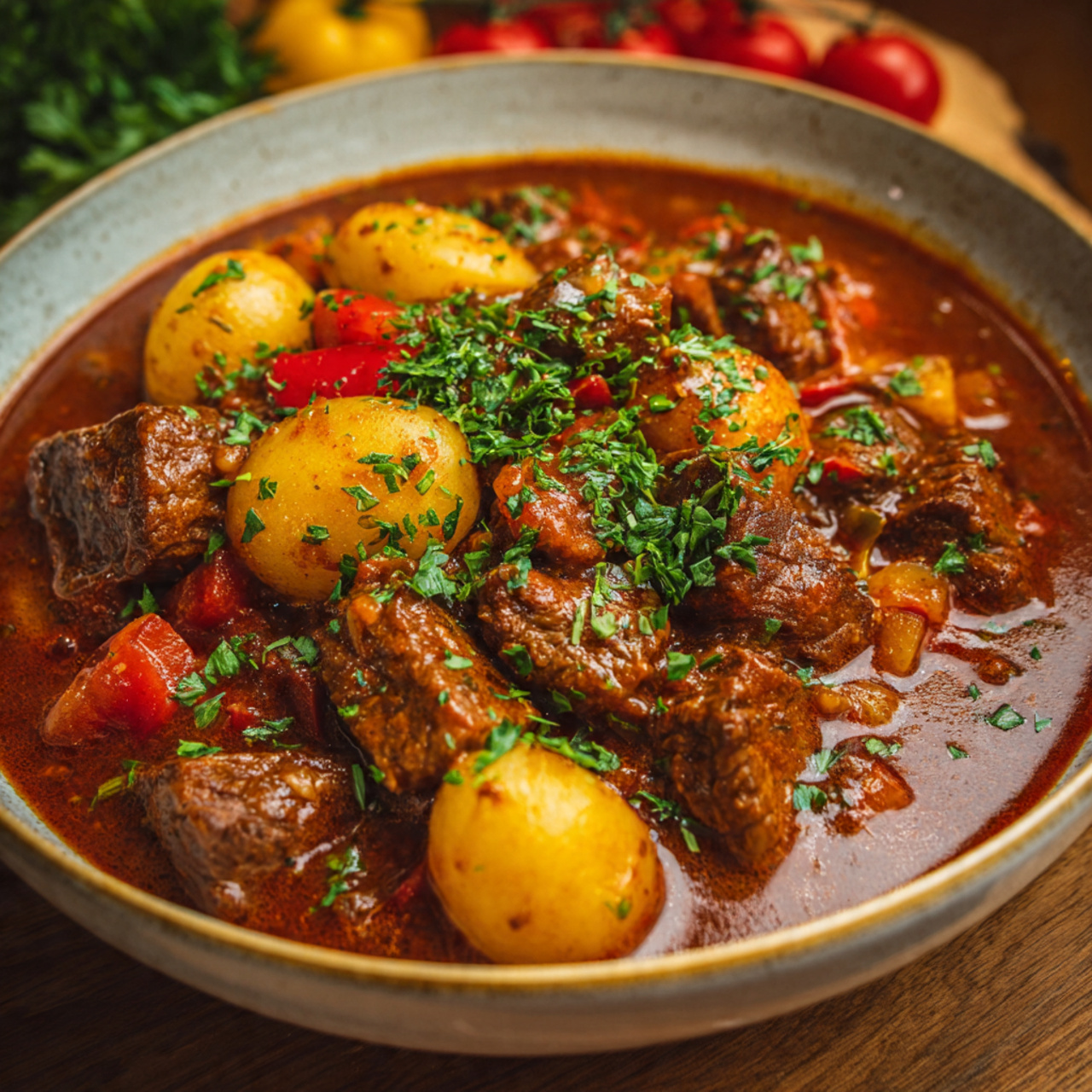
German Goulash is one of those soul-warming dishes that quietly commands respect — a deeply savory, paprika-rich beef stew that has fed generations of families across Central Europe and earned a permanent spot on the dinner tables of Germany’s heartland. With its deeply pigmented, velvety sauce, fork-tender chunks of beef, and that unmistakable warmth that comes only from slow cooking with love and patience, German Goulash is far more than just a stew. It is a story told in one pot, a tradition passed from grandmother to grandchild, and one of the most satisfying meals you will ever set down on a cold evening.
If you’ve ever sat inside a cozy German Gasthaus on a rainy afternoon and ordered Rindergulasch with a generous pile of buttered Spätzle or crusty bread to soak up every last drop of that glorious sauce, you’ll understand exactly why this dish holds such a cherished place in the culinary heart of Germany. And if you haven’t — well, that experience is precisely what this recipe is designed to recreate right in your own kitchen, with no passport required.
In this comprehensive guide, we’re diving deep into authentic German Goulash: where it comes from, how it differs from its Hungarian cousin, exactly what ingredients and techniques produce the most extraordinary results, and every tip and trick you need to make this dish a triumphant success every single time you make it.
The Story Behind German Goulash: A Dish With Roots and Soul
To truly appreciate German Goulash, it helps to understand where it came from. Goulash — known in Hungarian as gulyás — originally referred to a simple meat soup prepared by Hungarian cattle herders (called gulyások) as far back as the 9th century. The dish traveled through Central Europe over centuries, and as it crossed into German-speaking territories, it evolved into something distinctly its own.
While Hungarian goulash tends to be more of a soup with a lighter broth, German Goulash (Rindergulasch or Deutsches Gulasch) is typically a thicker, richer stew with a more concentrated sauce. Germans also incorporate different aromatics, sometimes adding red wine, beef broth, and tomato paste, and the cooking process places heavy emphasis on properly caramelizing the onions — an often-overlooked step that makes an enormous difference in flavor depth.
The result is a dish that is simultaneously rustic and refined: humble enough to have fed working families for centuries, yet complex and satisfying enough to impress the most discerning dinner guest.
What Makes German Goulash Different From Other Versions?
This is a question that comes up often, and it deserves a clear answer. Here’s what sets German Goulash apart:
Onion ratio: German Goulash uses a remarkably high ratio of onions to meat — often nearly equal parts. The onions cook down completely, becoming almost invisible in the sauce while contributing incredible sweetness and body.
Paprika quality and quantity: Paprika is the soul of any goulash, and German recipes typically use both sweet and smoked paprika for a more nuanced flavor profile. The quality of your paprika matters enormously — fresh, vibrant paprika makes a dish that tastes alive.
Thicker sauce: Unlike the soupier Hungarian version, German Goulash has a rich, glossy, thick sauce that clings beautifully to egg noodles or bread.
Red wine: Many German Goulash recipes incorporate red wine, which adds depth and slight acidity to balance the richness of the meat and paprika.
No sour cream: Traditional German Goulash generally doesn’t stir sour cream into the stew itself (though it may be served alongside), keeping the sauce clean and intensely flavored.
Ingredients for Authentic German Goulash
For the Goulash
- 2 pounds (900g) beef chuck or beef shoulder — cut into 1.5-inch cubes (this cut becomes beautifully tender during slow cooking)
- 3 large yellow onions — roughly 1.5 pounds, thinly sliced (this generous amount is not a typo — trust the process)
- 3 cloves garlic — minced
- 3 tablespoons sweet paprika — Hungarian or Spanish preferred
- 1 tablespoon smoked paprika
- 1 teaspoon hot paprika or cayenne pepper — optional, for gentle heat
- 1 tablespoon tomato paste
- 1 cup dry red wine — a Burgundy or Merlot works wonderfully
- 2 cups beef broth — low-sodium, high quality
- 1 teaspoon caraway seeds — lightly crushed
- 2 teaspoons Worcestershire sauce
- 1 teaspoon dried marjoram — a classic German herb that adds floral, piney notes
- 1 bay leaf
- Salt and freshly ground black pepper — to taste
- 3 tablespoons lard, clarified butter, or vegetable oil — for browning
- 1 tablespoon all-purpose flour (optional, for sauce thickening)
- 1 tablespoon apple cider vinegar — added at the finish for brightness
Optional but Highly Recommended
- 2 medium bell peppers — red or green, diced (adds color and gentle sweetness)
- 1 medium tomato — peeled and diced
- Fresh flat-leaf parsley — for garnish
- Sour cream — for serving alongside
For Serving
- Egg noodles, Spätzle, or buttered bread dumplings (Semmelknödel)
- Crusty bread or rye bread
- Pickled cucumbers or red cabbage — for balance and acidity

Step-by-Step Instructions for Authentic German Goulash
Step 1: Prepare Your Beef
Remove the beef from the refrigerator at least 30 minutes before cooking. This allows it to reach room temperature, which ensures more even browning. Pat every piece completely dry with paper towels — this is non-negotiable. Moisture is the enemy of a proper sear. Season generously on all sides with salt and black pepper.
Cut the beef into roughly uniform 1.5-inch cubes. Pieces that are too small will overcook and become dry. Too large, and they won’t become tender within a reasonable cooking time.

Step 2: Sear the Beef in Batches
Heat your largest, heaviest pot — a Dutch oven or cast-iron casserole is ideal — over high heat. Add the fat and let it get very hot until it shimmers. Working in batches (never crowding the pan, which causes steaming rather than browning), sear the beef cubes for about 2-3 minutes per side until you achieve a deep, mahogany-brown crust on multiple sides.
This step is where many home cooks lose patience and rush, and it’s a costly mistake. That deeply caramelized crust — a result of the Maillard reaction — is where an enormous amount of the soup’s complex, meaty flavor comes from. Take your time. Do it in 2-3 batches. Transfer the browned beef to a plate and set aside.

Step 3: Caramelize the Onions — The Heart of German Goulash
Reduce the heat to medium and add a little more fat if needed. Add all the sliced onions along with a generous pinch of salt (which helps draw out moisture). Stir to coat them in the fat, then let them cook, stirring every few minutes.
This step will take 20-25 minutes. Don’t rush it. The onions need to go from raw and sharp to soft, golden, and deeply caramelized. They will reduce in volume dramatically — those three large onions will shrink down to a small, amber-colored pile of sweetness that forms the thickening backbone of the goulash sauce.
If the onions begin to stick or darken too quickly, add a splash of water and scrape up the bottom of the pot.

Step 4: Add Garlic, Paprika, and Tomato Paste
Once the onions are properly caramelized, reduce the heat to medium-low. Add the minced garlic and cook for 60 seconds, stirring constantly. Next, add all of the paprika — sweet, smoked, and hot — along with the caraway seeds. Stir immediately and continuously for 30-45 seconds.
This step is called blooming the spices, and it activates the fat-soluble flavor compounds in the paprika, making the final dish far more aromatic and flavorful. Be careful not to burn the paprika at this stage — it goes from fragrant to bitter very quickly.
Add the tomato paste and stir it into the onion and paprika mixture. Cook for 2 minutes, letting the tomato paste darken slightly and cook out its raw flavor.
Step 5: Deglaze With Red Wine
Pour in the red wine and stir vigorously, scraping up all the brown bits from the bottom of the pot (called fond) — those bits are pure concentrated flavor. Let the wine bubble and reduce for about 3-4 minutes until the alcohol smell mellows and the liquid has reduced by about half.
This deglazing step is one of the great unsung heroes of German Goulash. Every caramelized bit that comes off the bottom of that pot goes straight back into your sauce.
Step 6: Return the Beef and Add Broth
Return the seared beef to the pot along with any juices that have accumulated on the plate (those juices are liquid gold — don’t pour them away). Add the beef broth, Worcestershire sauce, dried marjoram, and bay leaf. Stir to combine everything.
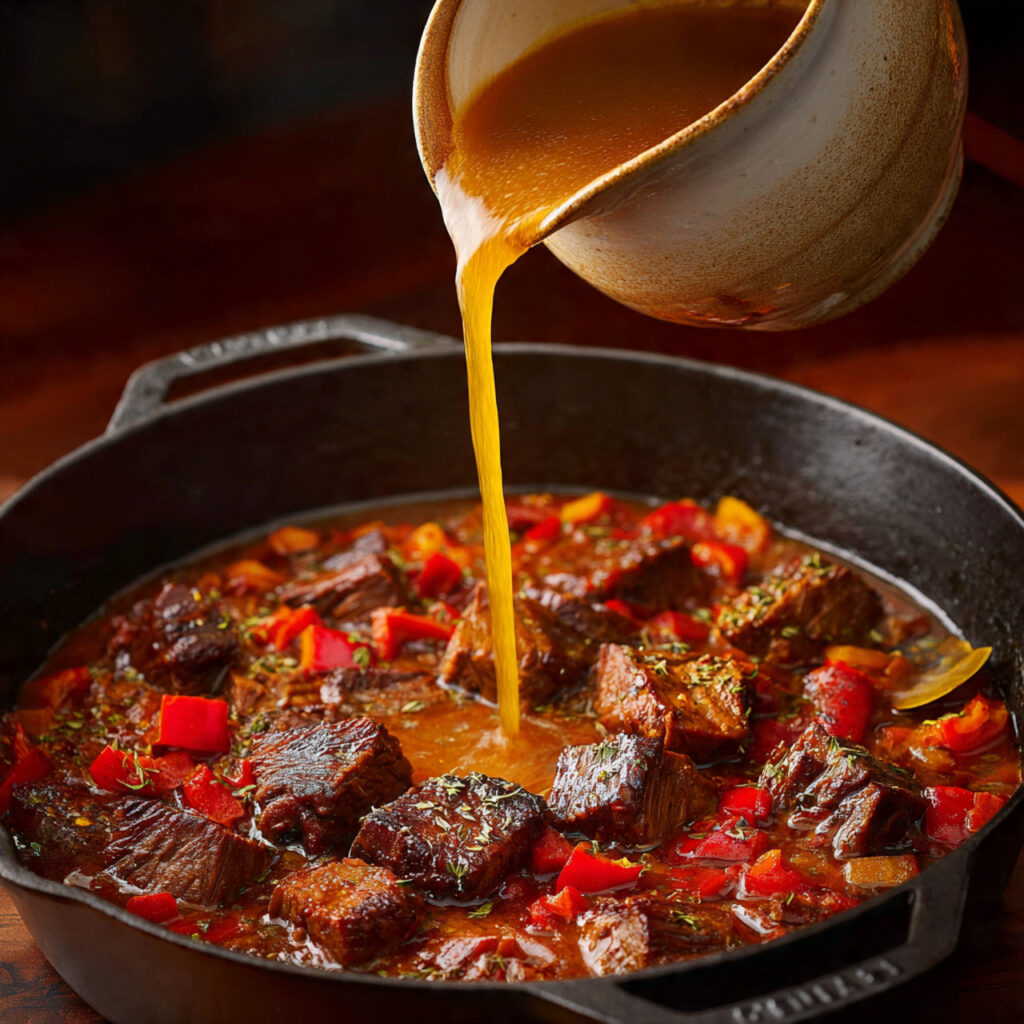
If using bell peppers and fresh tomato, add them now. Bring the mixture to a gentle boil, then immediately reduce the heat to low. You want a lazy, gentle simmer — just a few bubbles breaking the surface.
Step 7: Slow Cook to Tender Perfection
Cover the pot with a lid that’s slightly ajar and let the goulash simmer gently for 1.5 to 2 hours, stirring occasionally, until the beef is fork-tender and practically melts when you press it. The sauce should be thick, glossy, and deeply colored.
If the sauce seems too thin after cooking, remove the lid and let it simmer uncovered for an additional 10-15 minutes to reduce. If you prefer a slightly thicker sauce, whisk 1 tablespoon of flour into a small amount of cold broth or water, then stir it into the stew and simmer for an additional 5 minutes.
Step 8: Finish and Adjust
Remove the bay leaf. Stir in the apple cider vinegar, which brightens all the deep, rich flavors and provides balance. Taste carefully and adjust seasoning with salt, pepper, and additional paprika if desired.
Let the finished goulash rest off the heat for 10 minutes before serving — this allows the flavors to settle and intensify, and the sauce to reach the perfect consistency.

Step 9: Serve and Celebrate
Ladle generous portions over egg noodles, Spätzle, or alongside bread dumplings. Garnish with fresh flat-leaf parsley and a small dollop of cold sour cream if desired. Set out crusty bread or pickled vegetables on the side, and prepare to receive serious compliments.
Pro Tips for the Perfect German Goulash
Tip #1: Quality Paprika Changes Everything
Your German Goulash is only as good as your paprika. Paprika degrades in quality rapidly once opened, and old, pale, dusty paprika produces a flat, lifeless sauce. Buy fresh, vibrant-colored paprika — ideally from a Hungarian or specialty spice shop — and store it in an airtight container away from heat and light. If your paprika smells weak or looks faded, replace it before making this recipe.
Tip #2: Never Skip the Beef Browning
Skipping the searing step produces pale, flavorless meat and a thin, underwhelming sauce. The Maillard reaction that occurs during high-heat searing creates hundreds of new flavor compounds that simply cannot be replicated by slow cooking alone. Every minute you spend searing is rewarded tenfold in the final dish.
Tip #3: Use the Right Cut of Beef
Lean cuts like sirloin or tenderloin are the wrong choice for goulash. They dry out and toughen during the long braise. You want a cut with good fat marbling and collagen — beef chuck, beef shoulder, or beef shank are ideal. The collagen breaks down during slow cooking, creating that silky, luxurious texture in both the meat and the sauce.
Tip #4: Patience With the Onions
This tip is worth repeating: caramelize the onions properly. They are the structural and flavor foundation of German Goulash. Pale, half-cooked onions produce a sharp, harsh flavor and watery sauce. Golden, deeply caramelized onions melt invisibly into the sauce, providing sweetness, body, and incredible depth of flavor.
Tip #5: Low and Slow Wins the Race
German Goulash should never be rushed. A rolling boil toughens meat fibers and creates a cloudy, greasy sauce. A gentle, patient simmer — barely a bubble — produces velvet-soft meat and a clean, glossy, concentrated sauce. If you’re ever in doubt, go lower and slower.
Tip #6: Make It the Day Before
Like most braises and stews, German Goulash tastes significantly better the next day. The resting time allows all the flavors to deepen, meld, and harmonize in ways that simply can’t happen in real time. If you have the foresight to make it a day ahead, you will be astonished by the difference.
Tip #7: Season in Layers, Not All at Once
Add salt at multiple stages — when browning the beef, when sweating the onions, and again at the finish after tasting. Layered seasoning produces a more balanced, fully integrated flavor than seasoning only at the beginning or end.
Tip #8: A Parmesan Rind Adds Magic
This is a secret from Italian nonna kitchens that translates beautifully to German Goulash: tuck a Parmesan rind into the stew while it braises. It quietly adds a deep, savory umami richness that enriches the sauce in ways that are hard to identify but impossible to ignore.
Common Mistakes to Avoid When Making German Goulash
Mistake #1: Crowding the Pan When Searing
Placing too much beef in the pan at once drops the temperature dramatically, causing the meat to steam in its own moisture rather than sear. The result is gray, flavorless meat with no crust. Always sear in small batches with space between each piece.
Mistake #2: Using Low-Quality or Old Paprika
As emphasized in the tips section, paprika is the defining spice of German Goulash. Using stale, old paprika is one of the most common reasons a home cook’s goulash falls flat despite following all other steps correctly.
Mistake #3: Cooking at Too High a Temperature
A common impatience-driven mistake. Boiling goulash makes the beef tough and fibrous, breaks down the sauce into an unpleasant, greasy mess, and drives off the subtle flavors you worked so hard to build. Keep it at a gentle, lazy simmer throughout the braise.
Mistake #4: Skipping the Acid Finish
Many recipes omit the final splash of apple cider vinegar (or lemon juice), but this small addition has a dramatic impact. It lifts the heavy, rich flavors of the stew and makes the entire dish taste brighter, more alive, and more balanced. Don’t skip it.
Mistake #5: Adding All the Liquid at Once Too Early
Resist the urge to add all the broth immediately. Allowing each addition of liquid to partially evaporate before adding more builds a more concentrated, complex sauce. If you add everything at once at the beginning, you’ll spend the rest of the cooking time trying to reduce a thin, watery broth.
Mistake #6: Cutting the Beef Too Small
Small pieces of beef become dry, stringy, and difficult to distinguish from the sauce by the time the goulash is fully cooked. Keep your chunks at 1.5 inches minimum to ensure they remain pleasingly chunky and juicy.

Storage and Serving Suggestions for German Goulash
Refrigerating
German Goulash keeps beautifully in the refrigerator for up to 5 days in an airtight container. The flavors continue to develop during storage, so day-two and day-three portions are often considered the best. Always store the goulash separately from any cooked noodles or Spätzle, which will absorb sauce and become mushy if stored together.
Freezing
This dish freezes exceptionally well for up to 4 months. Cool completely, then portion into freezer-safe containers or heavy-duty zip-lock bags. Leave some headspace for expansion. Thaw overnight in the refrigerator and reheat gently on the stovetop over medium-low heat, adding a splash of broth if needed to restore the sauce consistency.
Reheating
Reheat goulash gently and slowly on the stovetop, stirring occasionally to prevent the sauce from scorching. Add small amounts of broth or water as needed. Avoid microwave reheating for large portions as it heats unevenly, though it works fine for individual servings.
Traditional German Serving Accompaniments
- Spätzle — soft German egg noodles, the most classic pairing
- Bread Dumplings (Semmelknödel) — soft, pillowy dumplings perfect for sauce-soaking
- Mashed potatoes — creamy and buttery, a comforting alternative
- Wide egg noodles — easy and accessible
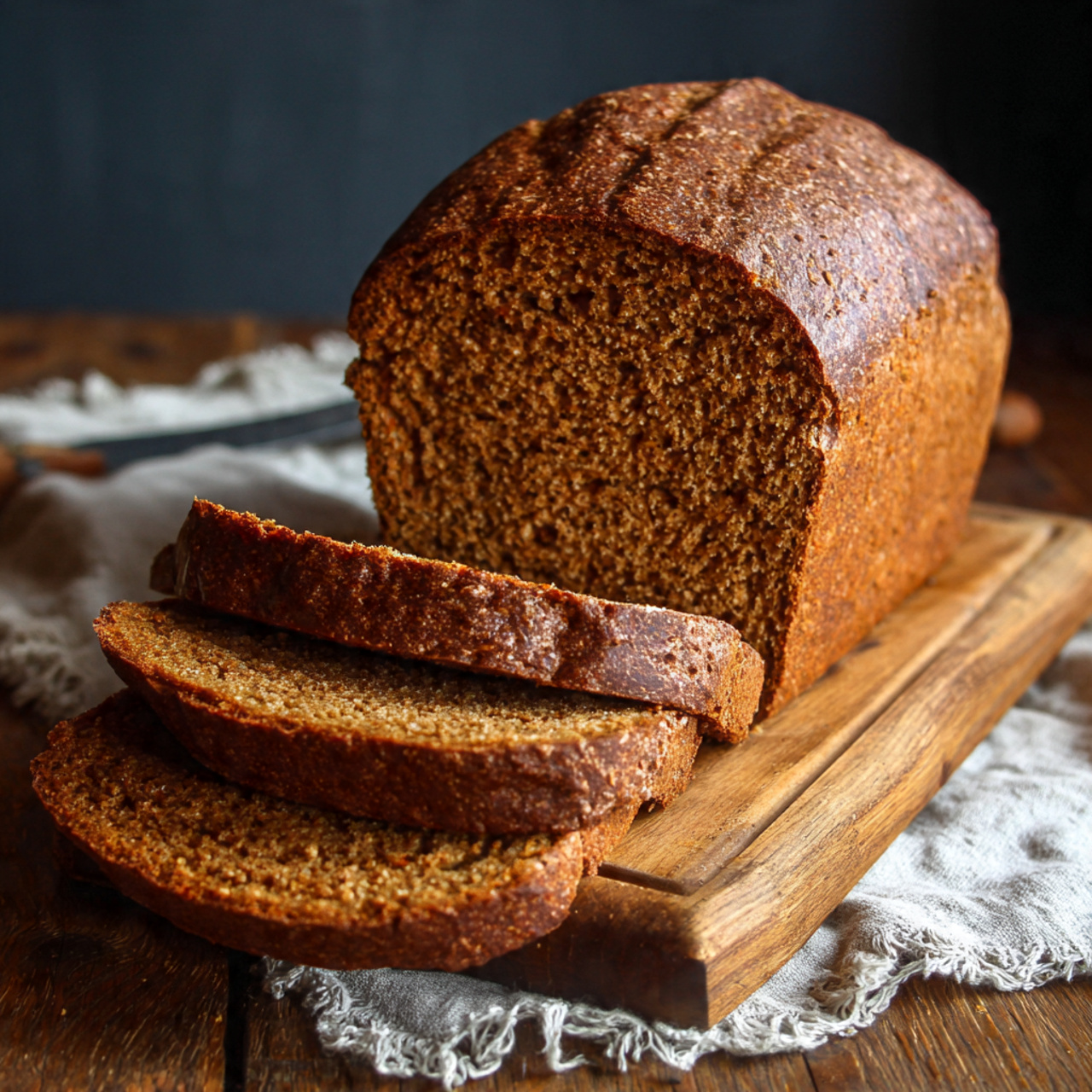
- Rye bread or Bauernbrot — for the most authentic experience
- Red cabbage (Rotkohl) — braised with apple and vinegar for beautiful color contrast
- Cucumber pickles (Gurken) — the acidity cuts through the richness magnificently
- Fresh green salad — a simple vinaigrette salad lightens the meal
Frequently Asked Questions About German Goulash
What is the difference between German Goulash and Hungarian Goulash?
While both trace their heritage to the same Hungarian cattle-herder origins, the two dishes evolved quite differently. Hungarian Goulash (gulyás) is typically closer to a soup — lighter in texture with a thinner broth, often containing potatoes, and sometimes egg noodles cooked directly in the soup. It traditionally uses lard and caraway seeds as primary aromatics alongside paprika.
German Goulash (Rindergulasch) is thicker and stew-like, with a deeply reduced, concentrated sauce. It often incorporates red wine and tomato paste for additional depth, uses a very high onion ratio as a thickening mechanism, and is typically served over or alongside a separate starch rather than cooked with it. German Goulash also tends to be less sour-cream-forward than some Eastern European variations.
Can I make German Goulash in a slow cooker or Instant Pot?
Both methods work well with some modifications. For a slow cooker, complete steps 1 through 6 on the stovetop (searing, caramelizing, blooming spices, deglazing), then transfer everything to your slow cooker. Cook on LOW for 7-8 hours or HIGH for 4-5 hours until the beef is completely tender. Remove the lid for the last 30 minutes if you want to thicken the sauce.
For an Instant Pot, use the sauté function for the browning and aromatics stages. Add all remaining ingredients, seal the lid, and pressure cook on HIGH for 35 minutes. Allow natural pressure release for 15 minutes before manually releasing. Switch back to sauté mode if further sauce reduction is needed.
What type of beef is best for German Goulash?
Beef chuck (also called chuck roast or chuck shoulder) is the gold standard for goulash. It has an ideal balance of muscle fiber, fat marbling, and collagen — the collagen converts to gelatin during slow braising, giving the sauce its characteristic silky, glossy body. Beef shank is another excellent option with even more collagen, though it takes longer to become fully tender. Avoid lean cuts like sirloin, round, or tenderloin, which dry out and toughen rather than become tender during long cooking.
Is German Goulash gluten-free?
The base recipe is naturally gluten-free if you skip the optional flour thickener and use a gluten-free Worcestershire sauce (most brands contain malt vinegar derived from barley). Always verify that your beef broth is certified gluten-free. If you need to thicken the sauce, use a cornstarch slurry (1 tablespoon cornstarch mixed with 2 tablespoons cold water) instead of flour for a completely gluten-free version.
What wine should I use in German Goulash?
Use a dry, medium-bodied red wine that you would enjoy drinking. A Pinot Noir, Merlot, or dry Burgundy works beautifully. Avoid overly tannic wines like Cabernet Sauvignon, which can make the sauce bitter, and never use “cooking wine” from a bottle, which contains added salt and preservatives and produces an inferior result. If you prefer to cook without alcohol, substitute an equal amount of additional beef broth plus 1 tablespoon of red wine vinegar for acidity.
Can I make German Goulash ahead of time?
Not only can you make it ahead — you absolutely should. German Goulash, like virtually all braised meat dishes, improves significantly with time. Making it 24-48 hours in advance allows the spices to fully bloom, the meat to absorb the sauce more completely, and all the flavor elements to integrate into a harmonious, deeply satisfying whole. Simply cool it completely, refrigerate, and reheat gently when needed.
Is German Goulash spicy?
Traditional German Goulash is warmly spiced with paprika but not aggressively hot. The sweet and smoked paprika provide color, aroma, and flavor without significant heat. The level of spiciness is entirely within your control — add hot paprika or cayenne pepper for gentle warmth, or omit it entirely for a completely mild version. Many German families serve goulash with a small bowl of hot paprika on the side so guests can season their own portions.
Conclusion: Why German Goulash Deserves a Permanent Place in Your Recipe Collection
German Goulash is the kind of recipe that rewards you every single time you make it. It rewards your patience during the onion caramelization. It rewards your diligence during the searing step. It rewards your restraint in keeping the simmer low and slow. And ultimately, it rewards every person fortunate enough to sit down to a bowl of it, offering one of the most comforting, deeply satisfying eating experiences that European cuisine has to offer.
What makes this dish particularly special in the context of modern cooking is that it asks nothing exotic or expensive of you. It transforms humble, affordable ingredients — beef chuck, onions, paprika, broth — into something that genuinely feels luxurious. That transformation is achieved not through expensive components, but through technique, time, and an understanding of why each step matters.
Whether you’re making this for a weekend family dinner, meal-prepping a week’s worth of hearty lunches, hosting a dinner party that needs to impress without stressing you out, or simply seeking that rare meal that wraps you in warmth and comfort from the very first bite — German Goulash delivers on every count, every time.
Make it once, and it will become a recipe you return to for the rest of your life. That’s not a promise made lightly. It’s simply what happens when centuries of culinary tradition land in your Dutch oven and your kitchen fills with the kind of smell that makes people wander in from the other end of the house asking, “What are you making? It smells incredible.”
Now you know exactly how to answer.
Approximate Nutrition Information
Per Serving (based on 6 servings, goulash only without accompaniments):
| Nutrient | Amount |
|---|---|
| Calories | 420 kcal |
| Total Fat | 22g |
| Saturated Fat | 8g |
| Trans Fat | 0g |
| Cholesterol | 105mg |
| Sodium | 680mg |
| Total Carbohydrates | 14g |
| Dietary Fiber | 3g |
| Sugars | 7g |
| Protein | 38g |
| Vitamin A | 85% DV |
| Vitamin C | 40% DV |
| Iron | 25% DV |
| Potassium | 820mg |
| Calcium | 6% DV |
Nutritional values are approximate and will vary based on specific ingredients, cuts of meat, and portion sizes used. Values do not include serving accompaniments such as noodles, bread, or sour cream.
Print
German Goulash: The Ultimate Guide to Germany’s Most Beloved Comfort Dish
A deeply rich, paprika-spiced German beef stew slow-braised to tender perfection with caramelized onions, red wine, and aromatic herbs. This authentic Rindergulasch is the ultimate Central European comfort food — hearty, flavorful, and even better made ahead.
- Total Time: 2 hours 20 minutes
- Yield: 6 servings
Ingredients
Main:
- 2 lbs (900g) beef chuck, cut into 1.5-inch cubes
- 3 large yellow onions, thinly sliced
- 3 cloves garlic, minced
- 3 tbsp sweet paprika
- 1 tbsp smoked paprika
- 1 tsp hot paprika or cayenne (optional)
- 1 tbsp tomato paste
- 1 cup dry red wine
- 2 cups low-sodium beef broth
- 1 tsp caraway seeds, lightly crushed
- 2 tsp Worcestershire sauce
- 1 tsp dried marjoram
- 1 bay leaf
- Salt and black pepper to taste
- 3 tbsp lard, clarified butter, or vegetable oil
- 1 tbsp all-purpose flour (optional, for thickening)
- 1 tbsp apple cider vinegar (added at finish)
Optional:
- 2 medium bell peppers, diced
- 1 medium tomato, peeled and diced
- Fresh flat-leaf parsley for garnish
- Sour cream for serving
Instructions
- Pat beef dry, season with salt and pepper. Sear in batches over high heat until deeply browned, 2-3 minutes per side. Set aside.
- In the same pot, sauté sliced onions over medium heat with a pinch of salt for 20-25 minutes until deeply golden and caramelized.
- Add garlic, cook 1 minute. Add all paprika and caraway seeds, stir constantly for 30-45 seconds. Add tomato paste, cook 2 minutes.
- Deglaze with red wine, scraping up all brown bits. Reduce by half, about 3-4 minutes.
- Return beef to pot. Add broth, Worcestershire sauce, marjoram, bay leaf, and optional bell peppers and tomato.
- Bring to a gentle boil, then reduce to a low simmer. Cover partially and cook 1.5 to 2 hours until beef is fork-tender.
- Remove bay leaf. Stir in apple cider vinegar. Taste and adjust seasoning. Rest 10 minutes before serving.
- Serve over Spätzle, egg noodles, or with crusty bread and a garnish of fresh parsley.
Notes
- Goulash tastes significantly better made 24 hours in advance — plan ahead when possible
- Use fresh, high-quality paprika for the best flavor — old paprika ruins this dish
- Never boil; always maintain a gentle simmer for tender, silky results
- For gluten-free: skip flour thickener, use cornstarch slurry and GF Worcestershire sauce
- Parmesan rind added during braising adds incredible umami depth
- Freeze without any starch accompaniments for best results
- Prep Time: 20 minutes
- Cook Time: 2 hours
- Category: Main dishes
- Method: Baking, Stovetop Braising
- Cuisine: German
- Diet: Gluten-Free, Low-Carb