

Raspberry Macarons: The Ultimate Guide to Perfectly Delicate French Cookies (2026)

Introduction
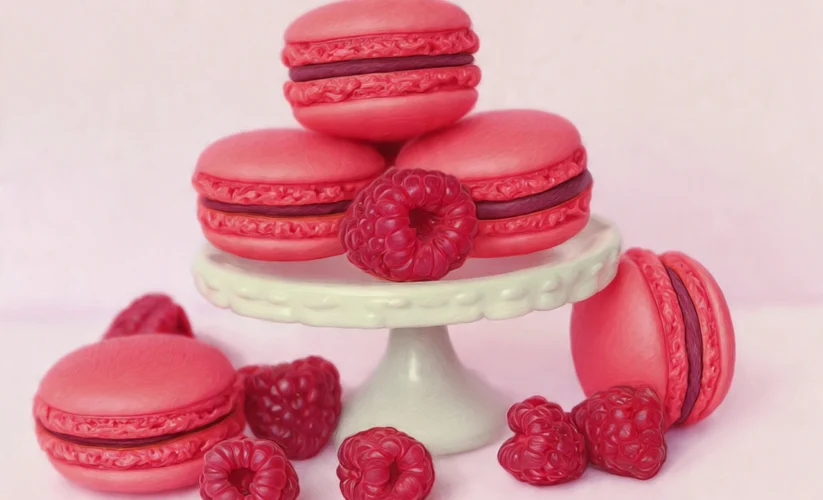
Raspberry Macarons are the crown jewel of French pastry making, combining delicate almond meringue shells with luscious raspberry buttercream filling. These elegant pink cookies have captured hearts worldwide with their signature smooth tops, ruffled feet, and that perfect chewy-yet-crispy texture that melts on your tongue. While macarons have earned a reputation for being finicky, I’m here to tell you that with the right technique and a bit of patience, anyone can master these beautiful treats in their own kitchen.
After two decades of baking and testing countless batches, I’ve cracked the code to foolproof raspberry macarons that rival those from Parisian patisseries. Whether you’re preparing for a special celebration, looking to impress dinner guests, or simply want to challenge yourself with a rewarding baking project, this comprehensive guide will walk you through every single step. From achieving those coveted feet to avoiding hollow shells, you’ll learn all the secrets professional pastry chefs use to create picture-perfect macarons every single time.
The combination of tart raspberry and sweet almond creates a flavor profile that’s simply irresistible. Unlike plain macarons, the natural acidity of raspberries cuts through the richness, making these cookies surprisingly light and refreshing. Best of all, once you master the basic technique, you’ll have the confidence to experiment with endless flavor variations.
Ingredients
For the Macaron Shells:
- 200 grams almond flour (super fine, blanched)
- 200 grams powdered sugar (confectioners’ sugar)
- 150 grams egg whites (approximately 4-5 large eggs), aged at room temperature
- 200 grams granulated sugar
- 50 ml water
- Pink gel food coloring (optional, for deeper color)
- 1/4 teaspoon cream of tartar
- Pinch of salt
For the Raspberry Buttercream Filling:
- 1 cup (226g) unsalted butter, softened to room temperature
- 3 cups (360g) powdered sugar, sifted
- 1/2 cup (120g) raspberry puree (fresh or frozen raspberries, strained)
- 1 tablespoon heavy cream
- 1/2 teaspoon vanilla extract
- Pinch of salt
- 2-3 drops pink food coloring (optional)
Optional Garnish:
- Freeze-dried raspberry powder
- Fresh raspberries for photography
- Gold leaf flakes for special occasions

Step-by-Step Instructions
Preparing Your Workspace
Before you begin, organization is everything when making macarons. Line two large baking sheets with parchment paper or silicone baking mats. If using parchment, you can print or draw macaron templates (1.5-inch circles) and place them under the parchment as guides. Prepare a piping bag fitted with a round tip (Wilton 12 or similar). Have all ingredients measured and ready to go, as timing matters significantly in macaron making.
Step 1: Sift the Dry Ingredients
Combine the almond flour and powdered sugar in a food processor. Pulse 8-10 times to break up any clumps and create an ultra-fine mixture. This step is crucial for smooth macaron tops. Sift the mixture twice through a fine-mesh sieve into a large bowl. Any large pieces that don’t pass through should be discarded or processed further. Set this mixture aside.
Step 2: Prepare the Italian Meringue
Separate your eggs carefully, ensuring no yolk gets into the whites. For best results, age egg whites by leaving them covered at room temperature for 24 hours before use, or separate them 2-3 days ahead and refrigerate, then bring to room temperature. Place egg whites in the bowl of a stand mixer fitted with the whisk attachment. Add cream of tartar and salt.
In a small saucepan, combine granulated sugar and water. Place over medium-high heat without stirring. Use a candy thermometer to monitor the temperature. When the sugar syrup reaches 230°F (110°C), start beating the egg whites on medium speed. When the syrup reaches exactly 244°F (118°C), remove from heat immediately.
Step 3: Create Stiff Peaks
With the mixer running on medium speed, carefully pour the hot sugar syrup down the side of the bowl in a slow, steady stream. Avoid pouring directly onto the whisk. Once all syrup is added, increase speed to high and beat for 8-10 minutes until the meringue is glossy, thick, and the bowl feels cool to the touch. The meringue should hold very stiff peaks. Add food coloring during the last minute of beating if using.
Step 4: Macaronage (The Folding Technique)
This is the most critical step. Add half of the sifted almond flour mixture to the meringue. Using a flexible silicone spatula, fold gently but deliberately. Scrape around the edges and fold from the bottom up. Add the remaining almond flour mixture and continue folding. The technique is to press the batter against the side of the bowl, then scoop and fold.
You’re looking for a thick, flowing batter that falls off the spatula in a thick ribbon. When you lift the spatula, the batter should flow slowly and the ribbon should disappear back into the batter within 10-15 seconds. This is called the “lava stage.” Typically this takes 40-60 folds. Under-mixing results in cracked, bumpy shells; over-mixing creates flat, spread-out cookies.
Step 5: Pipe the Macarons
Transfer the batter immediately to your prepared piping bag. Hold the bag perpendicular to the baking sheet, about half an inch above the surface. Pipe straight down using even pressure to create 1.5-inch rounds, spacing them about 2 inches apart. Once all batter is piped, firmly tap the baking sheet against the counter 5-6 times to release air bubbles. Use a toothpick to pop any visible bubbles on the surface.
Step 6: Develop the Skin
Let the piped macarons rest at room temperature for 30-60 minutes. The exact time depends on humidity levels in your kitchen. You’ll know they’re ready when you can gently touch the surface and it feels dry and doesn’t stick to your finger. This crucial step creates the signature smooth top and allows feet to form during baking.
Step 7: Bake to Perfection
Preheat your oven to 300°F (150°C). Bake one sheet at a time on the center rack for 14-16 minutes. The macarons are done when they don’t wobble when gently touched and they’ve developed feet. Rotate the pan halfway through for even baking. Let cool completely on the baking sheet before attempting to remove them.
Step 8: Make the Raspberry Buttercream
While macarons cool, prepare fresh raspberries by blending and straining through a fine-mesh sieve to remove seeds. You should have 1/2 cup of smooth puree. In a stand mixer with the paddle attachment, beat softened butter on medium-high speed for 3-4 minutes until pale and fluffy. Gradually add powdered sugar, one cup at a time, beating well after each addition.
Add raspberry puree, vanilla extract, heavy cream, and salt. Beat on high speed for 5 minutes until light, fluffy, and perfectly smooth. The buttercream should hold stiff peaks. Transfer to a piping bag fitted with a small round tip.
Step 9: Assemble the Macarons
Match macaron shells by size, pairing them up. Pipe a generous dollop of raspberry buttercream onto the flat side of one shell. Gently sandwich with its matching shell, giving a slight twist. The filling should just reach the edges. Repeat with all remaining shells.
Step 10: Mature the Flavor
Place assembled macarons in an airtight container and refrigerate for at least 24 hours before serving. This maturation period allows the shells to absorb moisture from the filling, creating that perfect chewy texture and allowing flavors to meld beautifully.
Pro Tips for Perfect Raspberry Macarons
Temperature Control is Everything
Your kitchen environment plays a massive role in macaron success. The ideal temperature is between 68-72°F with low humidity. On humid days, extend the drying time and consider using a dehumidifier. I’ve found that running the air conditioning on muggy summer days makes all the difference between success and frustration.
Invest in a Kitchen Scale
Baking macarons by volume measurements is a recipe for disaster. Digital kitchen scales that measure in grams are inexpensive and absolutely essential. Even a few grams difference in egg whites can throw off your entire batch. This isn’t the time for approximation.
The Toothpick Test
Not sure if your batter is properly mixed? Pipe a small test dollop onto parchment. It should spread slightly and any peak should disappear within 15 seconds. If it holds a peak, fold a few more times. If it spreads rapidly and becomes very thin, you’ve overmixed.
Oven Thermometer is Non-Negotiable
Most home ovens run 10-25 degrees off from the display temperature. Invest in an oven thermometer to know your true baking temperature. I also recommend doing a test batch to understand your oven’s hot spots and quirks.
Silicone Mats vs. Parchment Paper
Both work beautifully, but silicone baking mats provide more consistent results, especially for beginners. They conduct heat more evenly and macarons release effortlessly. If using parchment, never grease it, as this causes spreading.
The Freezer is Your Friend
Both unfilled shells and assembled macarons freeze beautifully for up to three months. Freeze unfilled shells in airtight containers with parchment between layers. Freeze assembled macarons in a single layer, then transfer to containers. Thaw in the refrigerator overnight.
Natural Color Alternatives
For those avoiding artificial food coloring, freeze-dried raspberry powder adds both color and intense flavor to the shells. Add 1-2 tablespoons to the almond flour mixture. Beetroot powder is another natural pink option, though it has a more earthy undertone.
Common Mistakes to Avoid
Cracked Tops
Cracks appear when the oven temperature is too high or when you skip the drying time. Always use an oven thermometer and ensure shells form a skin before baking. Sudden temperature changes can also cause cracking, so never open the oven door during the first 12 minutes of baking.
No Feet
The absence of those adorable ruffled feet usually indicates under-beaten meringue or insufficient oven temperature. Your meringue should be extremely stiff and glossy. Additionally, ensure your oven has fully preheated and holds steady temperature throughout baking.
Hollow Shells
This frustrating issue typically stems from under-mixing the batter or over-beating the meringue. The macaronage technique requires confidence. Trust the process and fold until you reach the proper lava consistency. Hollow shells can also result from too high of baking temperature.
Lopsided Macarons
Uneven shells are usually caused by not holding the piping bag perpendicular when piping or by hot spots in your oven. Practice your piping technique and always rotate the pan halfway through baking. Using templates under parchment paper helps maintain consistency.
Sticking to the Pan
If macarons stick, they likely weren’t fully cooled before removal. Let them cool completely, then slide a thin offset spatula underneath. Using quality silicone mats or parchment prevents most sticking issues. Greasing the surface causes macarons to spread and lose their shape.
Wrinkled Tops
Wrinkles form when the skin hasn’t properly developed before baking. Extend the drying time, especially on humid days. Your kitchen’s humidity level dramatically affects drying time. In very dry climates, 20-30 minutes may suffice. In humid environments, you might need 90 minutes or more.
Browning Too Quickly
Over-browning indicates excessive oven temperature. Lower the temperature by 10-15 degrees. Some bakers also double-stack baking sheets to insulate the bottom and prevent over-browning. Every oven bakes differently, so adjustments are normal.
Storage and Serving Suggestions
Refrigeration
Assembled raspberry macarons should be stored in an airtight container in the refrigerator for up to one week. The cold environment keeps the buttercream stable and fresh. Remove from the refrigerator 20-30 minutes before serving to allow them to come to room temperature for the best texture and flavor experience.
Room Temperature Display
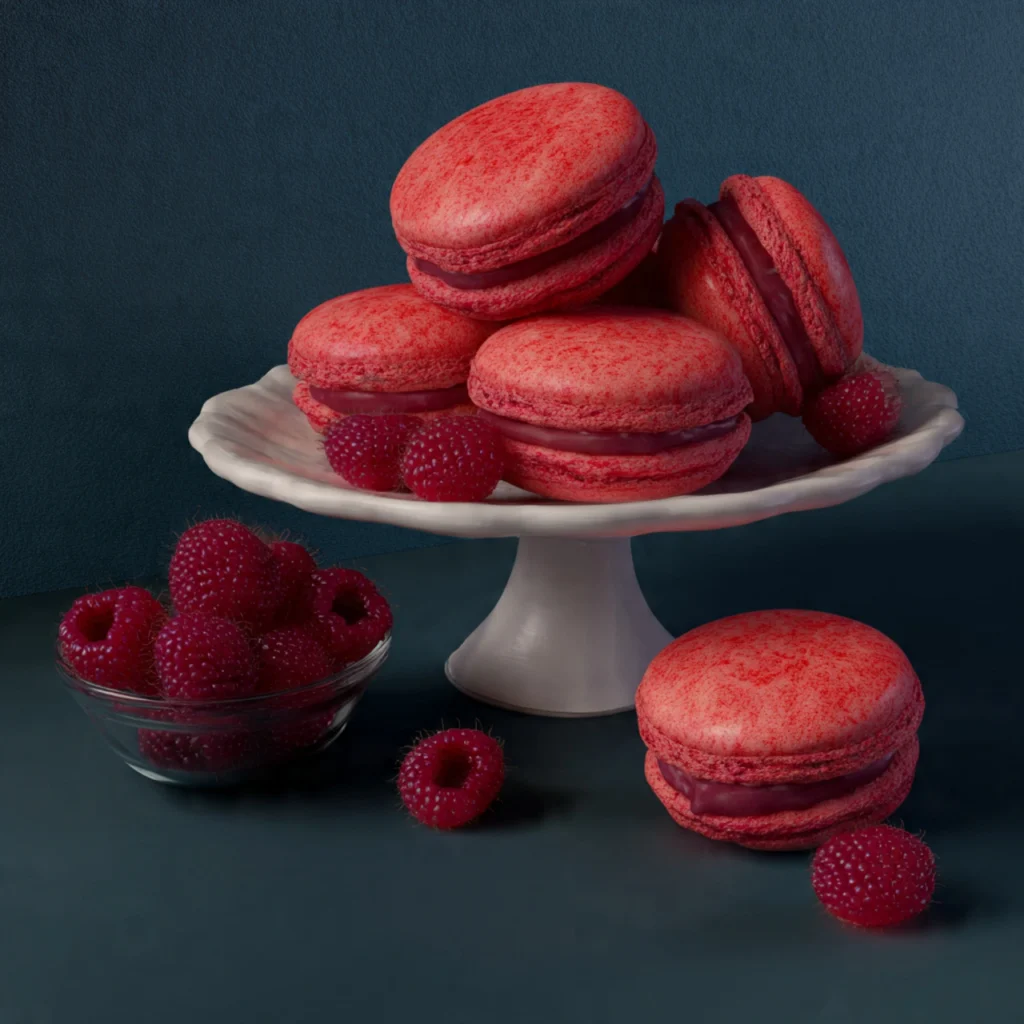
For parties, macarons can sit at room temperature for up to 4 hours. Beyond this, the buttercream may become too soft, especially in warm environments. Arrange them on a tiered serving platter for an elegant presentation that will absolutely wow your guests.
Freezing for Long-Term Storage
Both filled and unfilled macarons freeze exceptionally well. For unfilled shells, store in airtight containers with parchment paper between layers for up to three months. Filled macarons can be frozen for up to two months. Freeze in a single layer first, then stack with parchment between layers. Thaw overnight in the refrigerator, then bring to room temperature before serving.
Serving Presentation Ideas
Create a stunning macaron tower for weddings or celebrations using a specialized stand. Arrange by color gradient for visual impact. Package individual macarons in clear boxes tied with ribbon for party favors. Serve alongside champagne, coffee, or tea for an authentic French experience. Garnish serving platters with fresh raspberries, mint leaves, or edible flowers.
Gifting Macarons
Homemade raspberry macarons make extraordinary gifts. Package them in decorative boxes lined with tissue paper. Keep them refrigerated until shortly before presenting. Include a small note indicating they should be consumed within 3-5 days and stored in the refrigerator for best quality.

Frequently Asked Questions
Can I make macarons without a stand mixer?
While a stand mixer makes the process significantly easier, you can use a hand mixer for the Italian meringue. However, you’ll need to beat the egg whites longer to achieve the proper stiff peaks. Ensure your hand mixer is powerful enough, as weaker motors struggle with thick meringue. The key is achieving that glossy, stiff consistency regardless of equipment.
Why do my macarons have air bubbles after piping?
Air bubbles are completely normal and easily fixed. After piping all your macarons, firmly tap the baking sheet against the counter 5-6 times. This releases trapped air bubbles to the surface. Use a toothpick to pop any visible bubbles gently. This simple step prevents bumpy tops and ensures smooth, professional-looking shells.
Can I use fresh raspberry pieces instead of puree in the filling?
Fresh raspberry pieces create moisture issues that can make shells soggy and don’t provide smooth, pipeable buttercream. Always use strained raspberry puree for the buttercream filling. However, you can place one small piece of freeze-dried raspberry on top of the buttercream before sandwiching for added texture and visual appeal without moisture problems.
How do I know when my macaron batter is properly mixed?
The macaronage is complete when the batter flows like thick lava. Lift your spatula and let the batter fall back into the bowl. It should create a ribbon that slowly disappears back into the batter within 10-15 seconds. Draw a figure-8 with the falling batter. If you can complete the figure-8 without the ribbon breaking, you’re ready to pipe.
What’s the difference between French and Italian meringue macarons?
French meringue macarons use granulated sugar beaten directly into egg whites, making them slightly easier but more finicky. Italian meringue uses a hot sugar syrup poured into beaten egg whites, creating more stable, foolproof meringue that’s less affected by humidity. Italian meringue produces more consistent results, which is why I recommend it for beginners and experienced bakers alike.
Can I substitute almond flour with other nut flours?
Almond flour creates the traditional macaron flavor and texture. While you can experiment with hazelnut or pistachio flour, the texture will differ. Never substitute with coconut flour or all-purpose flour, as macarons require the fat content and fine texture of nut flours. For nut allergies, specialized nut-free macaron recipes exist using sunflower seed flour, though results vary significantly.
How can I fix overmixed macaron batter?
Unfortunately, there’s no way to fix overmixed batter. Overmixing deflates the meringue too much, and you can’t whip air back into it. The batter will be too runny and will spread excessively during baking, creating flat, thin cookies without feet. This is why the macaronage technique requires careful attention and practice to recognize the perfect consistency.
Why are my macarons chewy instead of having that signature texture?
Under-baking is the most common cause of overly chewy macarons. They should bake until set but not dry. Macarons also need the 24-hour maturation period in the refrigerator to develop proper texture. During this time, moisture from the filling softens the shells slightly, creating that perfect balance between crispy exterior and chewy center that defines a perfect macaron.
Conclusion
Mastering raspberry macarons is a journey that rewards patience, precision, and practice. While your first batch might not be perfect, each attempt teaches you something new about how these temperamental cookies behave. The satisfaction of pulling a tray of perfect macarons from your oven, complete with smooth tops, gorgeous feet, and that ideal texture, is absolutely worth the effort.
Remember that even professional pastry chefs had to practice countless times before achieving consistent results. Don’t be discouraged by early setbacks. Keep notes on what works in your specific kitchen environment, with your particular oven, and in your climate. These beautiful pink cookies are well worth the learning curve, and soon you’ll be creating impressive desserts that rival anything from a high-end French bakery.
The combination of tart raspberries and sweet almond creates an unforgettable flavor that will have everyone asking for your recipe. Whether you’re baking for a wedding, a baby shower, Valentine’s Day, or simply because you want to challenge yourself, raspberry macarons represent the pinnacle of home baking achievement. Now that you have all the tools, techniques, and troubleshooting tips, it’s time to tie on that apron and create some magic in your kitchen.
Print
Raspberry Macarons: The Ultimate Guide to Perfectly Delicate French Cookies (2026)
Elegant French Raspberry Macarons featuring delicate almond meringue shells with smooth tops and ruffled feet, filled with luscious raspberry buttercream. This comprehensive recipe includes Italian meringue technique for foolproof, bakery-quality results every time.
- Total Time: Approximately 3 hours active time
- Yield: 30 assembled macarons
Ingredients
Listed in full detail in the Ingredients section above, including precise gram measurements for both macaron shells (almond flour, egg whites, sugars) and raspberry buttercream filling.
Instructions
Complete step-by-step instructions provided above, covering preparation, Italian meringue technique, macaronage, piping, drying, baking, filling preparation, and assembly with professional tips throughout.
Notes
- Aging egg whites improves stability
- Kitchen humidity affects drying time significantly
- Use oven thermometer for accurate temperature
- 24-hour maturation in refrigerator essential for best texture
- Freeze assembled macarons up to 2 months for convenience
- Prep Time: 45 minutes
- Cook Time: 45 minutes
- Category: Desserts
- Method: Baking
- Cuisine: French
- Diet: Vegetarian




7 Comments
[…] Vallarta—the bartender placed this gorgeous gradient drink in front of me, shifting from deep red at the bottom to golden orange at the top, and I was mesmerized before I even took a sip. What shocked me most was learning […]
[…] Lavender Chamomile Latte recipe is the soothing hug your nervous system has been craving. I stumbled upon this calming elixir during a particularly […]
[…] Peanut Butter Cups are the ultimate homemade treat that combines rich, velvety chocolate with creamy peanut butter filling in perfect harmony. If […]
[…] a medium mixing bowl, whisk together the all-purpose flour, ground almonds, cinnamon, cloves, and salt. This ensures your dry ingredients are evenly distributed. Set this mixture […]
[…] Chocolate chip cookies hold a special place in the hearts of bakers and dessert lovers everywhere. There’s something magical about pulling a tray of golden-brown cookies from the oven, their edges crispy and centers soft, with pools of melted chocolate dotting the surface. Whether you’re baking for a special occasion, a weekend treat, or simply craving that perfect bite of nostalgia, mastering the art of chocolate chip cookies is a skill every home baker should possess. […]
[…] to our Fourth of July barbecue. I was skeptical—after all, how could something called a “salad” be a dessert? But one spoonful of that creamy, dreamy orange heaven changed everything. The way the […]
[…] A vanilla milkshake is more than just a simple dessert—it’s an American icon that evokes memories of retro diners, summer afternoons, and pure, uncomplicated pleasure. Despite its simplicity, creating the perfect vanilla milkshake requires understanding the delicate balance between thickness and drinkability, sweetness and vanilla intensity, and achieving that signature creamy texture that coats your straw just right. […]
Comments are closed.