
Candied Orange Peel in Syrup: Transform Citrus Scraps into Gourmet Gold

Introduction: The Art of Candied Orange Peel in Syrup
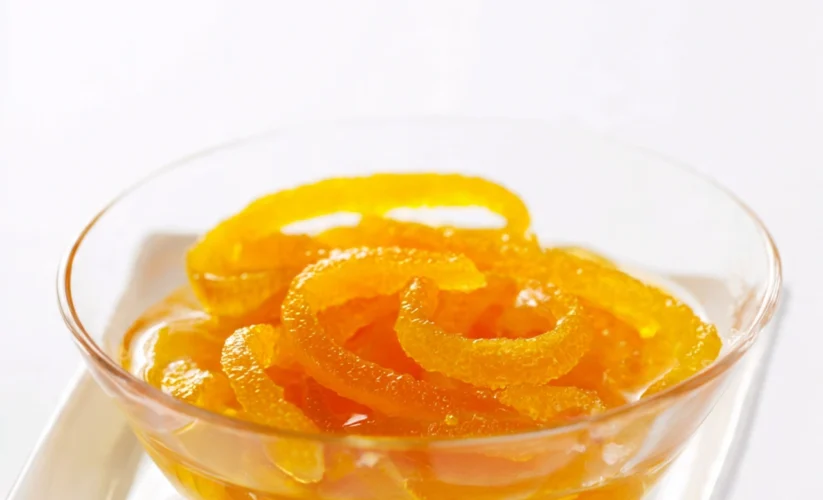
Candied orange peel in syrup is one of those magical recipes that transforms something you’d normally throw away into an elegant delicacy worthy of the finest chocolate shops. These glossy, translucent strips of citrus peel suspended in sweet syrup are simultaneously sophisticated and surprisingly simple to make at home.
I first discovered the beauty of candied orange peel during a holiday baking marathon years ago. I’d been making orange cake and found myself staring at a pile of bright orange peels, reluctant to toss them in the compost. A quick search led me down the rabbit hole of candied citrus, and I’ve been hooked ever since. That first batch was a revelation—intensely orange-flavored, pleasantly chewy, with just enough bitterness to balance the sweetness. I knew I’d stumbled onto something special.
What makes candied orange peel in syrup particularly wonderful is its versatility. Dipped in dark chocolate, it becomes an impressive homemade gift. Chopped fine, it elevates everything from panettone to scones. The leftover syrup becomes a precious ingredient for cocktails, glazes, or drizzling over desserts. Nothing goes to waste, and everything tastes incredible.
The process might seem lengthy at first glance, but it’s mostly hands-off simmering time. The active work is minimal, and the results are extraordinary. You’ll end up with jewel-like strips of candied peel that look and taste professional, along with a bottle of intensely flavored orange syrup that mixologists would pay good money for.
In this comprehensive guide, I’ll walk you through every step of creating perfect candied orange peel in syrup. We’ll cover selecting the right oranges, the crucial blanching process, timing the simmer just right, and storing your finished product for maximum shelf life. Whether you’re a seasoned candy maker or a complete beginner, you’ll find everything you need to succeed.
Why Make Your Own Candied Orange Peel?
Before we dive into the recipe, let’s talk about why homemade candied orange peel blows the store-bought version out of the water. Commercial candied peel is often tough, overly sweet, and contains preservatives and artificial colors. When you make it yourself, you control the sweetness level, ensure the peel stays tender, and know exactly what goes into it.
There’s also the satisfaction factor. Taking something destined for the trash and transforming it into something beautiful feels almost alchemical. You’re practicing zero-waste cooking while creating a gourmet ingredient that costs pennies to make but tastes like luxury.
Essential Ingredients for Candied Orange Peel in Syrup
The beauty of this recipe lies in its simplicity. You only need three basic ingredients, though quality matters significantly.
Main Ingredients
Fresh Oranges (4-6 large): You’ll need about 1 pound of orange peel. Choose thick-skinned oranges like navel or Valencia varieties. Organic is preferable since you’re eating the peel—conventional oranges may have pesticide residue or wax coating. Avoid thin-skinned varieties like mandarins, which don’t hold up well to the candying process.
Granulated Sugar (3 cups): Regular white sugar works perfectly. The sugar both sweetens the peel and preserves it. Don’t substitute with artificial sweeteners, as they won’t create the proper syrup consistency or preservation qualities.
Water (3 cups): Used for both blanching and creating the syrup. Filtered water is ideal if your tap water has a strong chlorine taste.
Optional Enhancements
Salt (pinch): A tiny amount of salt in the blanching water helps reduce bitterness.
Vanilla Bean (1): Split and added to the syrup for subtle vanilla notes.
Cinnamon Stick (1): Adds warm spice complexity.
Star Anise (2 pods): For an exotic, slightly licorice note.
Cloves (3-4): Use sparingly for aromatic depth.
Step-by-Step Instructions for Perfect Candied Orange Peel in Syrup
Step 1: Prepare the Orange Peel
Wash your oranges thoroughly under warm water, scrubbing to remove any wax coating. Pat them completely dry.
Using a sharp knife, score the orange peel from top to bottom in quarters, cutting just through the peel and white pith without piercing the fruit. Carefully peel away each quarter section. You want the peel with the white pith still attached—don’t worry about removing it. The pith becomes translucent and tender during candying.
Save the peeled oranges for juice, eating fresh, or another recipe. They’ll keep refrigerated for several days.
Slice the peel quarters into strips about ¼ inch wide. You can go thinner for delicate strips or wider for chunkier pieces. Keep them relatively uniform so they candy evenly.
Step 2: Blanch the Peel
This step is crucial for removing the bitter compounds that make raw orange peel unpleasant. Don’t skip it or rush it.
Place the orange peel strips in a large saucepan and cover with cold water. Bring to a boil over high heat, then immediately drain in a colander. Rinse the peel under cold water.
Repeat this blanching process two more times, for a total of three blanches. Each time, start with fresh cold water, bring to a boil, drain, and rinse. This removes progressively more bitterness while maintaining the peel’s integrity.
After the third blanch, drain the peel well and set aside while you prepare the syrup.
Step 3: Make the Simple Syrup
In the same saucepan (no need to wash it), combine 3 cups of sugar and 3 cups of water. If you’re using any optional flavorings like vanilla bean, cinnamon, or star anise, add them now.
Bring the mixture to a boil over medium-high heat, stirring occasionally until the sugar completely dissolves. You’ll know it’s ready when the liquid is perfectly clear with no sugar granules visible.
Step 4: Candy the Peel
Add your blanched orange peel strips to the boiling syrup. Reduce the heat to medium-low to maintain a gentle simmer. The syrup should bubble lazily but not vigorously boil.
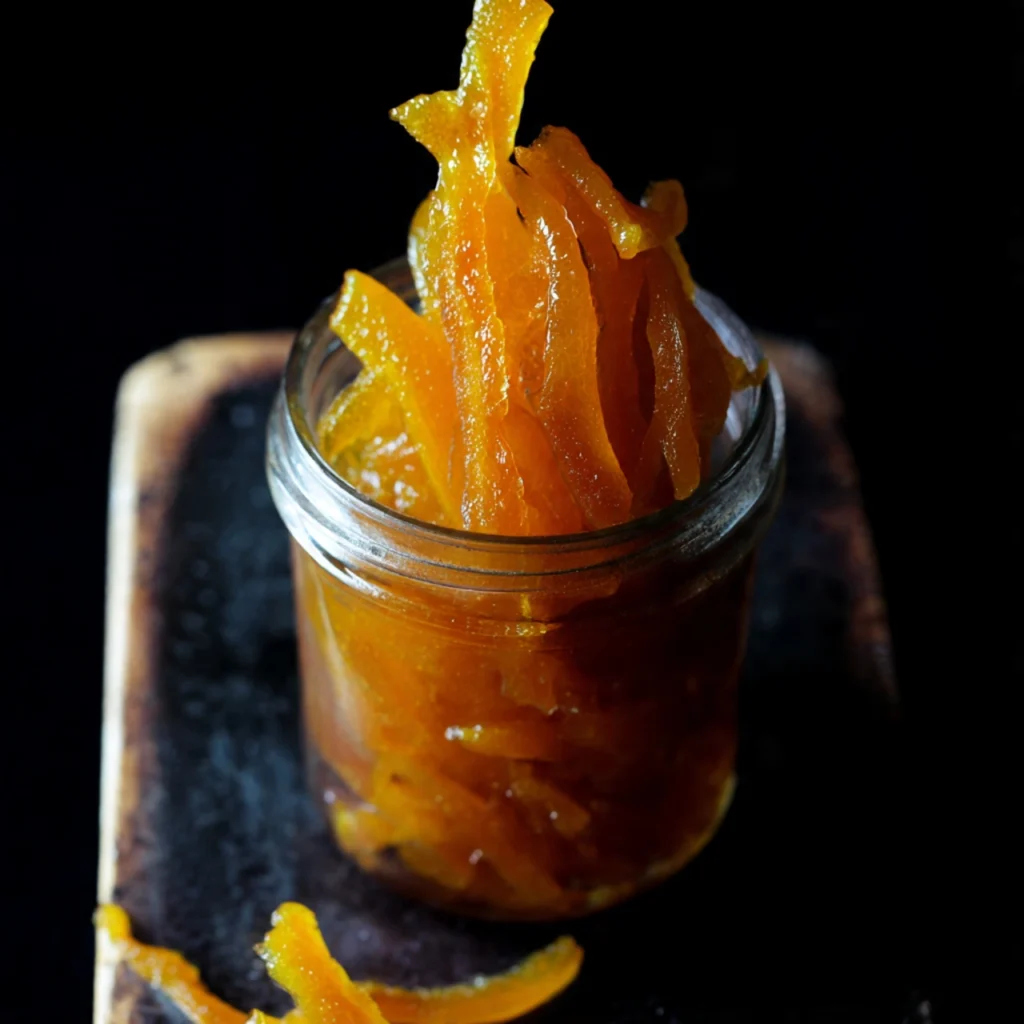
Simmer the peel uncovered for 45-60 minutes. You’re looking for the peel to become translucent and tender, and for the syrup to reduce and thicken slightly. The peel will look glossy and jewel-like when ready.
Stir occasionally to ensure even coating and prevent sticking. The peel will initially float, then gradually sink as it absorbs syrup and becomes saturated.
The peel is done when it’s completely translucent, tender when bitten, and the syrup has thickened to a consistency slightly thinner than honey. If you have a candy thermometer, you’re aiming for about 225-230°F, though this isn’t critical.
Step 5: Cool and Store
Using a slotted spoon or tongs, carefully transfer the candied orange peel to a wire cooling rack set over a baking sheet or piece of parchment paper. The excess syrup will drip off. Arrange the strips so they’re not touching—this prevents them from sticking together as they cool.
Let the peel cool completely at room temperature, about 2 hours. The strips will firm up slightly as they cool but should remain tender and chewy, not hard or brittle.
Meanwhile, strain the remaining syrup through a fine-mesh sieve to remove any solids or spices. Pour into a clean glass jar or bottle. This precious orange syrup is gold for cocktails, desserts, and glazes.
Step 6: Optional Coating
Once the candied peel is completely cool, you have several options. You can leave it as-is, stored in the syrup. You can let it dry further and toss it in granulated sugar for a sparkly finish. Or you can dip it in melted chocolate (dark chocolate is traditional and delicious) for an elegant confection.
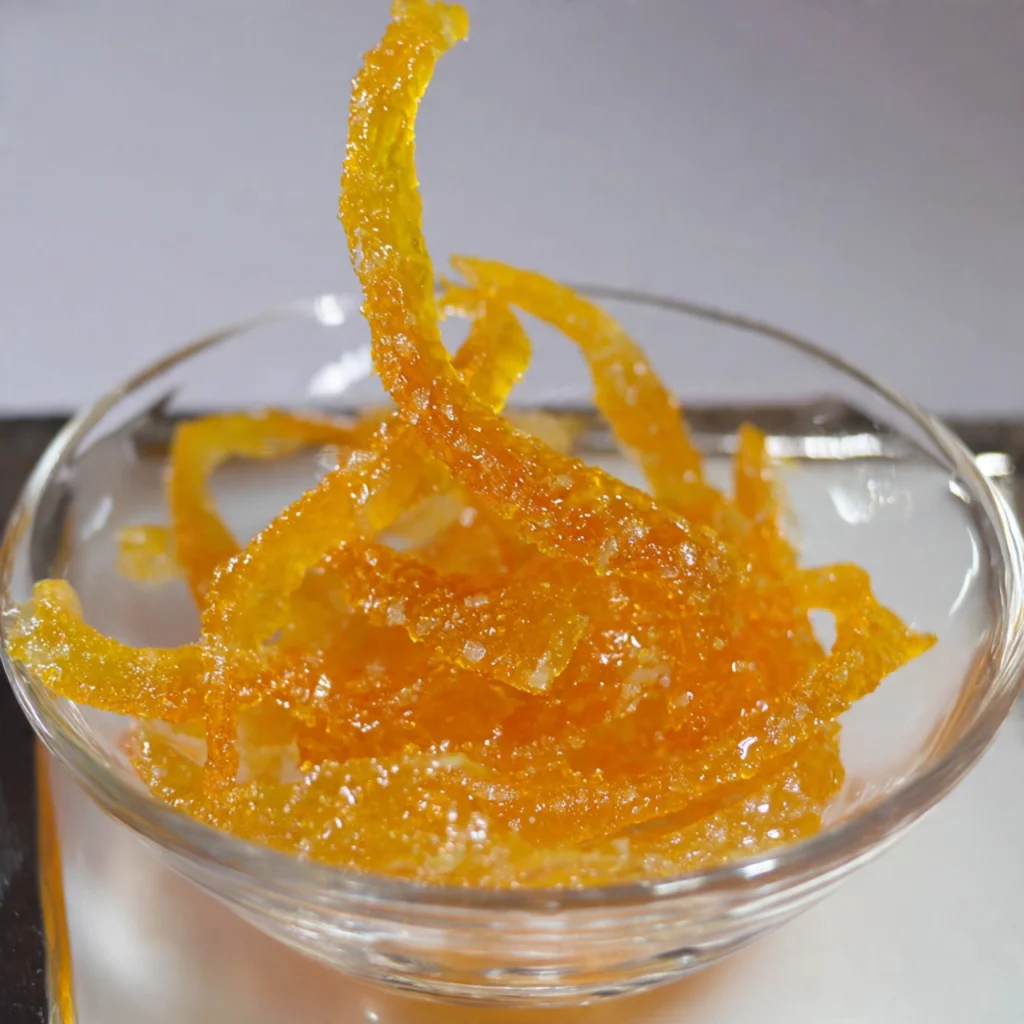
For sugar-coated peel, spread granulated sugar in a shallow dish and toss the cooled peel strips to coat completely. Shake off excess and let them dry on parchment paper for another hour.
For chocolate-dipped peel, melt 8 ounces of good-quality chocolate (dark, milk, or white) in a double boiler or microwave. Dip each strip halfway into the chocolate, let excess drip off, and place on parchment paper to set.
Pro Tips for Perfect Candied Orange Peel in Syrup
Don’t Rush the Blanching
Those three blanches aren’t optional if you want tender, non-bitter peel. I’ve tried shortcutting this step, and the results are always disappointing. Each blanch removes another layer of bitterness. Trust the process.
Size Matters for Consistency
Cut your peel strips as uniformly as possible. Wildly different sizes will candy unevenly—thin pieces may become too hard while thick pieces remain chewy. Aim for consistency within each batch.
Watch Your Simmer Temperature
A rolling boil will toughen the peel and reduce your syrup too quickly. A bare simmer is too gentle and extends cooking time unnecessarily. Find that sweet spot where the syrup bubbles gently but steadily.
Test for Doneness
The best test is simply tasting a piece. It should be tender enough to bite through easily, sweet throughout, with just a pleasant hint of bitterness. The peel should be translucent, not opaque.
Save Every Drop of Syrup
That leftover orange syrup is liquid gold. Use it in cocktails (orange old fashioned, anyone?), drizzle over pound cake or ice cream, add to vinaigrettes, or use as a glaze for roasted carrots or duck. It keeps for months refrigerated.
Experiment with Citrus Varieties
While this recipe focuses on oranges, the technique works beautifully with grapefruit, lemon, and lime peel. Each has its own character—grapefruit is more bitter and sophisticated, lemon is bright and tart, lime is intensely aromatic.
Make It Festive
During the holidays, add holiday spices to your syrup—cinnamon sticks, star anise, cloves, or cardamom pods. The candied peel takes on these flavors beautifully and makes exceptional gifts.
Use Quality Chocolate for Dipping
If you’re dipping your candied peel in chocolate, use real chocolate with cocoa butter, not chocolate chips or candy melts. The flavor and texture difference is significant. Dark chocolate with 60-70% cacao pairs particularly well with orange.
Common Mistakes to Avoid When Making Candied Orange Peel
Mistake 1: Using Waxed or Heavily Treated Oranges
Conventional oranges are often coated with wax and may have pesticide residue. Since you’re eating the peel, this matters. Always choose organic oranges when possible, or scrub conventional oranges extremely well with hot water and a vegetable brush.
Mistake 2: Skipping or Shortening the Blanching Process
This is the most common mistake beginners make. Blanching removes the bitter compounds that make raw peel unpleasant. Skipping even one blanch results in unacceptably bitter candied peel. Don’t rush this step.
Mistake 3: Boiling Too Vigorously
A hard boil toughens the peel and causes the syrup to reduce too quickly, potentially burning before the peel is properly candied. Always maintain a gentle simmer, not a rolling boil.
Mistake 4: Not Cooking Long Enough
Undercandied peel will be tough, opaque, and not properly preserved. The peel needs to become completely translucent and tender. This takes the full 45-60 minutes. Be patient.
Mistake 5: Storing While Still Warm
If you store candied peel in a jar while it’s still warm, condensation will form, creating excess moisture that can lead to mold. Always let everything cool completely to room temperature before storing.
Mistake 6: Overcrowding During Cooling
If the peel strips touch while cooling, they’ll stick together in a clumped mass. Arrange them separately on your cooling rack, even if it means working in batches.
Mistake 7: Throwing Away the Syrup
That intensely flavored orange syrup is a valuable byproduct. Discarding it is wasteful. Strain it, bottle it, and use it in countless applications. It keeps refrigerated for months.
Mistake 8: Using Thin-Skinned Oranges
Mandarins, clementines, and other thin-skinned varieties don’t have enough pith to candy properly. They become too delicate and fall apart. Stick with thick-skinned navel or Valencia oranges.
Storage and Serving Suggestions
Storing Candied Orange Peel
You have several storage options depending on how you plan to use your candied peel.
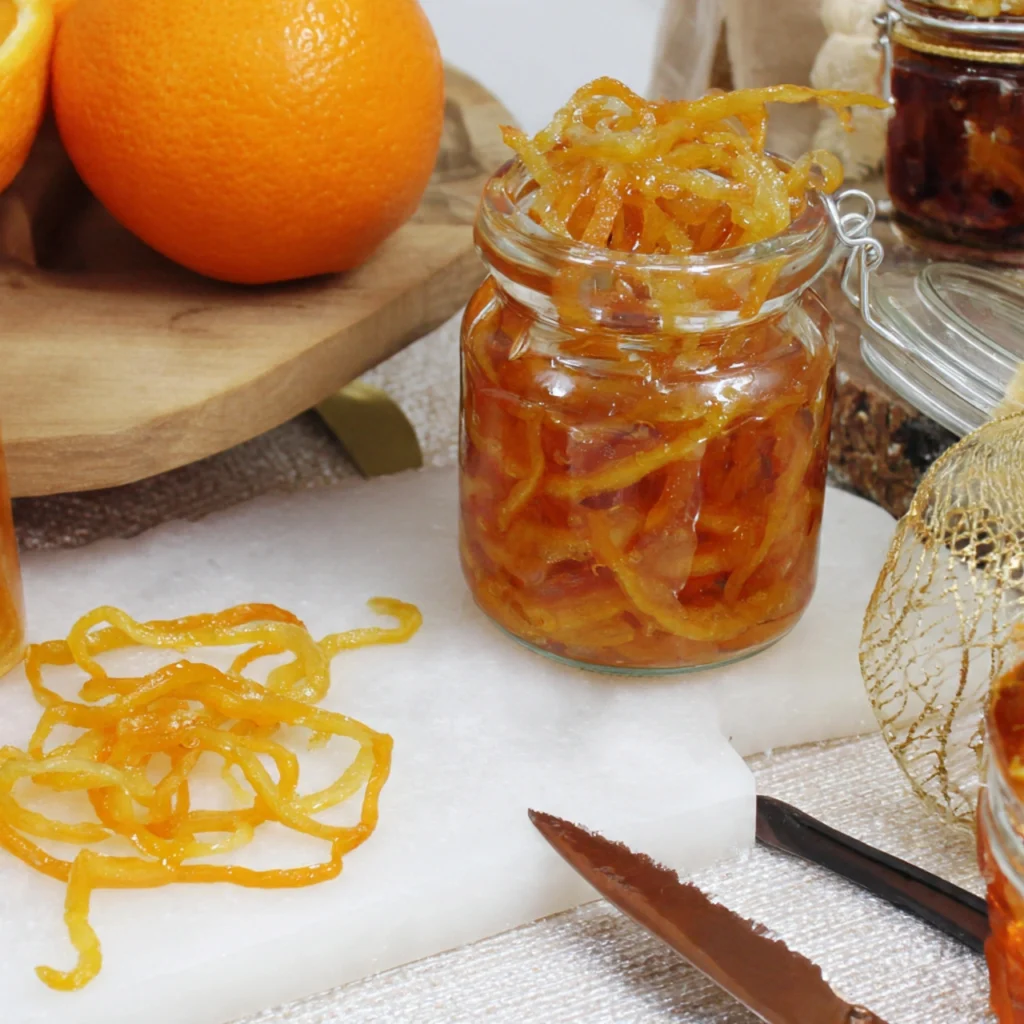
In Syrup: Store the candied peel completely submerged in the syrup in an airtight glass jar. Refrigerated, it will keep for 6 months or longer. This is the best method for long-term storage and keeps the peel especially tender.
Dried and Sugar-Coated: If you’ve tossed your peel in sugar, let it dry completely (24 hours), then store in an airtight container with parchment paper between layers. This method is best for snacking or using in baking. It will keep at room temperature for 2-3 weeks, or refrigerated for 2 months.
Chocolate-Dipped: Store chocolate-dipped peel in an airtight container with parchment between layers in a cool, dry place. Don’t refrigerate chocolate-covered peel, as condensation will cause the chocolate to bloom (develop white streaks). It will keep for 2-3 weeks.
Frozen: Candied orange peel freezes beautifully. Layer it between parchment paper in a freezer container for up to 1 year. Thaw in the refrigerator before using.
Serving Suggestions
The uses for candied orange peel in syrup are nearly endless. Here are my favorites:
Chocolate-Dipped Confections: Dip in dark, milk, or white chocolate for elegant homemade candy. Perfect for gift-giving or serving with after-dinner coffee.
Baking Ingredient: Chop finely and add to scone dough, cookie batter, quick breads, panettone, fruitcake, or hot cross buns. It adds intense orange flavor and chewy texture.
Dessert Garnish: Use whole strips to garnish cakes, tarts, panna cotta, or ice cream. The visual impact is stunning.
Cocktail Enhancement: Use strips as a garnish for cocktails, or muddle in drinks for intense orange flavor. The syrup makes an incredible cocktail sweetener.
Cheese Board Addition: Serve alongside aged cheddar, manchego, or blue cheese. The sweet-bitter orange complements strong cheeses beautifully.
Trail Mix or Granola: Chop and add to homemade trail mix or granola for a gourmet touch.
Salad Topping: Sliver thinly and add to winter salads with bitter greens, nuts, and citrus vinaigrette.
Hot Chocolate Stirrer: Use a strip to stir hot chocolate or coffee for a subtle orange infusion.
Using the Orange Syrup
Don’t forget about that beautiful orange syrup. Here are some delicious uses:
Cocktails: Use as a sweetener in old fashioneds, margaritas, or champagne cocktails.
Pancake or Waffle Syrup: Drizzle over breakfast items instead of maple syrup.
Cake Soak: Brush over cake layers before frosting for extra moisture and flavor.
Ice Cream Topping: Drizzle over vanilla ice cream or gelato.
Glaze Base: Reduce further and use as a glaze for ham, duck, or roasted vegetables.
Vinaigrette: Mix with olive oil and vinegar for a citrusy salad dressing.
Frequently Asked Questions About Candied Orange Peel in Syrup
Can I make candied orange peel without the white pith?
You can, but I don’t recommend it. The pith contains pectin that helps the peel candy properly and provides structure. Without it, you’re left with only the thin zest layer, which becomes too delicate and can burn or become brittle. The pith also becomes translucent and tender during candying, so there’s no reason to remove it.
Why is my candied orange peel bitter?
Insufficient blanching is almost always the culprit. You need to blanch the peel three times in fresh water to remove the bitter compounds. Each blanch should start with cold water, come to a full boil, then be drained immediately. Skipping blanches or not boiling the water fully will result in bitter peel.
How long does candied orange peel in syrup last?
When stored properly submerged in syrup in an airtight container in the refrigerator, candied orange peel will keep for 6 months or longer. The high sugar content acts as a preservative. Sugar-coated dried peel keeps for 2-3 weeks at room temperature or 2 months refrigerated. Chocolate-dipped peel keeps for 2-3 weeks in a cool, dry place.
Can I use other citrus fruits for this recipe?
Absolutely! The technique works wonderfully with grapefruit, lemon, lime, and even pomelo peel. Each citrus has its own flavor profile—grapefruit is more bitter and sophisticated, lemon is bright and tart, lime is intensely aromatic. You may want to add an extra blanch for particularly bitter varieties like grapefruit.
My syrup crystallized during storage. What happened?
Sugar crystallization happens when there’s a seed crystal or if the syrup was disturbed while hot. It’s harmless and easily fixed. Simply reheat the syrup gently until the crystals dissolve. To prevent crystallization, make sure your storage jar is completely clean, avoid stirring the hot syrup unnecessarily, and ensure the lid is airtight.
Can I reduce the sugar in this recipe?
Unfortunately, reducing the sugar significantly will affect both the texture and preservation quality. The high sugar concentration is what candies the peel and preserves it for long-term storage. You can reduce it slightly (by maybe ½ cup), but go too low and you’ll end up with boiled orange peel rather than properly candied peel.
Why did my orange peel turn out tough and chewy?
Tough peel usually results from boiling too hard during the candying process, not simmering long enough, or using oranges with particularly thick, tough pith. Make sure you maintain a gentle simmer (not a rolling boil) and give the peel the full 45-60 minutes to become translucent and tender.
Can I make candied orange peel without corn syrup?
This recipe doesn’t use corn syrup at all—just sugar and water. Some recipes include corn syrup to prevent crystallization, but it’s not necessary. The key is controlling your temperature and not agitating the syrup while it’s hot.
Approximate Nutrition Information
Per serving (1 ounce or about 3-4 strips):
- Calories: 110
- Total Fat: 0g
- Saturated Fat: 0g
- Trans Fat: 0g
- Cholesterol: 0mg
- Sodium: 0mg
- Total Carbohydrates: 28g
- Dietary Fiber: 1g
- Sugars: 26g
- Protein: 0g
- Vitamin C: 8% DV
- Calcium: 1% DV
- Iron: 0% DV
Note: Nutrition information is approximate and based on candied orange peel stored in syrup. Values will vary depending on how much syrup clings to each piece and whether the peel is coated in additional sugar or chocolate. This analysis does not include chocolate coating if applied.
Final Thoughts on Candied Orange Peel in Syrup
Making candied orange peel in syrup is one of those transformative kitchen experiences that changes how you think about cooking. You take something most people throw away without a second thought and turn it into something precious, beautiful, and delicious. It’s the essence of resourceful cooking, waste-not-want-not philosophy, and old-world confectionery technique all rolled into one.
The first time you pull a glossy strip of jewel-like candied peel from that fragrant syrup and taste it—sweet, intensely orange, with just the right amount of pleasant bitterness—you’ll understand why this simple technique has been treasured for centuries. These aren’t just candied peels; they’re edible gemstones that you created with your own hands from something that would have been garbage.
What I love most about this recipe is its generosity. One batch yields so much: beautiful candied peel for baking, snacking, or gift-giving; precious orange syrup for cocktails and desserts; and the satisfaction of having mastered a technique that seems mysterious but is actually quite approachable.
I encourage you to make this recipe your own. Try different citrus varieties, experiment with spices in your syrup, dip the finished peel in your favorite chocolate, or find new ways to use that incredible orange syrup. Once you’ve mastered the basic technique, the variations are endless.
Most importantly, share your candied orange peel. Package it beautifully and give it as gifts. Serve it at dinner parties with coffee. Add it to your holiday baking. These little gestures of homemade elegance have a way of making ordinary moments feel special.
Happy candying!
Print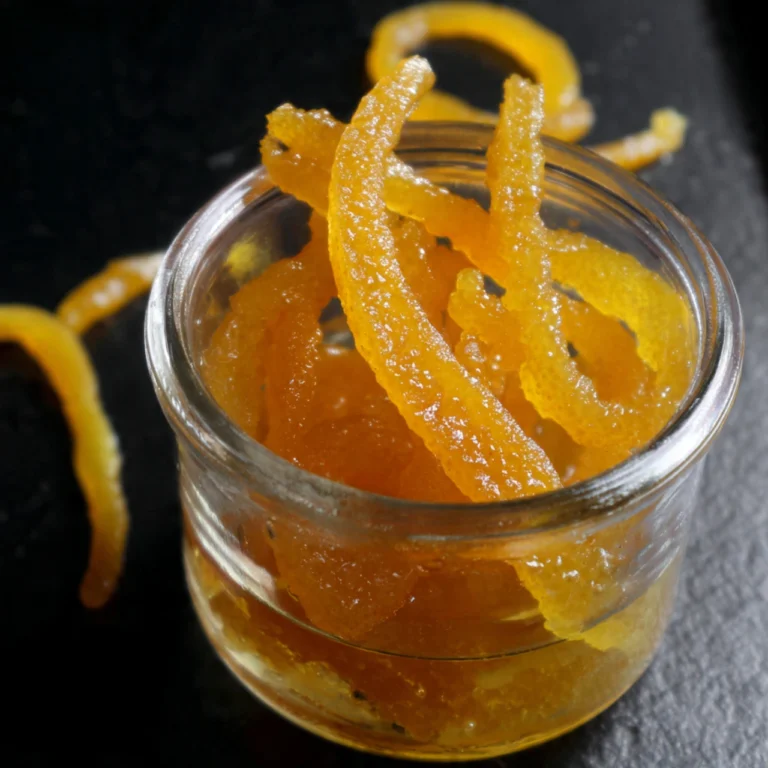
Candied Orange Peel in Syrup: Transform Citrus Scraps into Gourmet Gold
Transform fresh orange peels into elegant candied confections suspended in fragrant syrup. These glossy, translucent strips are perfect for dipping in chocolate, adding to baked goods, or enjoying as a sophisticated sweet treat. The leftover orange syrup is a bonus ingredient for cocktails and desserts.
- Total Time: 4 hours (including cooling time)
- Yield: About 2 cups candied peel plus 2 cups syrup
Ingredients
- 4-6 large oranges (about 1 pound of peel)
- 3 cups granulated sugar
- 3 cups water
- Pinch of salt (optional)
- 1 vanilla bean, split (optional)
- 1 cinnamon stick (optional)
- 2 star anise pods (optional)
Instructions
- Wash oranges thoroughly and pat dry. Score peel into quarters and carefully remove from fruit. Slice peel into ¼-inch strips.
- Place peel in a saucepan, cover with cold water, bring to a boil, then drain. Repeat this blanching process two more times (three total blanches).
- In the same saucepan, combine 3 cups sugar and 3 cups water. Add any optional spices. Bring to a boil, stirring until sugar dissolves completely.
- Add blanched orange peel to the boiling syrup. Reduce heat to maintain a gentle simmer.
- Simmer uncovered for 45-60 minutes, stirring occasionally, until peel is translucent and tender and syrup has thickened.
- Using a slotted spoon, transfer peel to a wire rack set over a baking sheet. Arrange strips so they don’t touch.
- Let cool completely at room temperature, about 2 hours.
- Strain remaining syrup and store in a glass jar. Store candied peel in syrup or coat with sugar/chocolate as desired.
Notes
- Use thick-skinned oranges like navel or Valencia varieties
- Organic oranges are preferable since you’re consuming the peel
- Don’t skip the three blanching steps—they remove bitterness
- Maintain a gentle simmer, not a rolling boil, during candying
- Save the orange syrup for cocktails, desserts, and glazes
- Peel keeps for 6+ months refrigerated in syrup
- Can be frozen for up to 1 year between parchment layers
- Prep Time: 30 minutes
- Cook Time: 1 hour 30 minutes
- Category: Desserts
- Method: Blanching
- Cuisine: French
- Diet: Vegan